The 1996 Cocoa Beach Pier fire
On March 1996 a kitchen fire at the head of the Cocoa Beach Pier burned the restaurant and bar structures to the deck. Half the pier was rebuilt over the following 18 months. The most expensive single non-hurricane event in the pier's history.
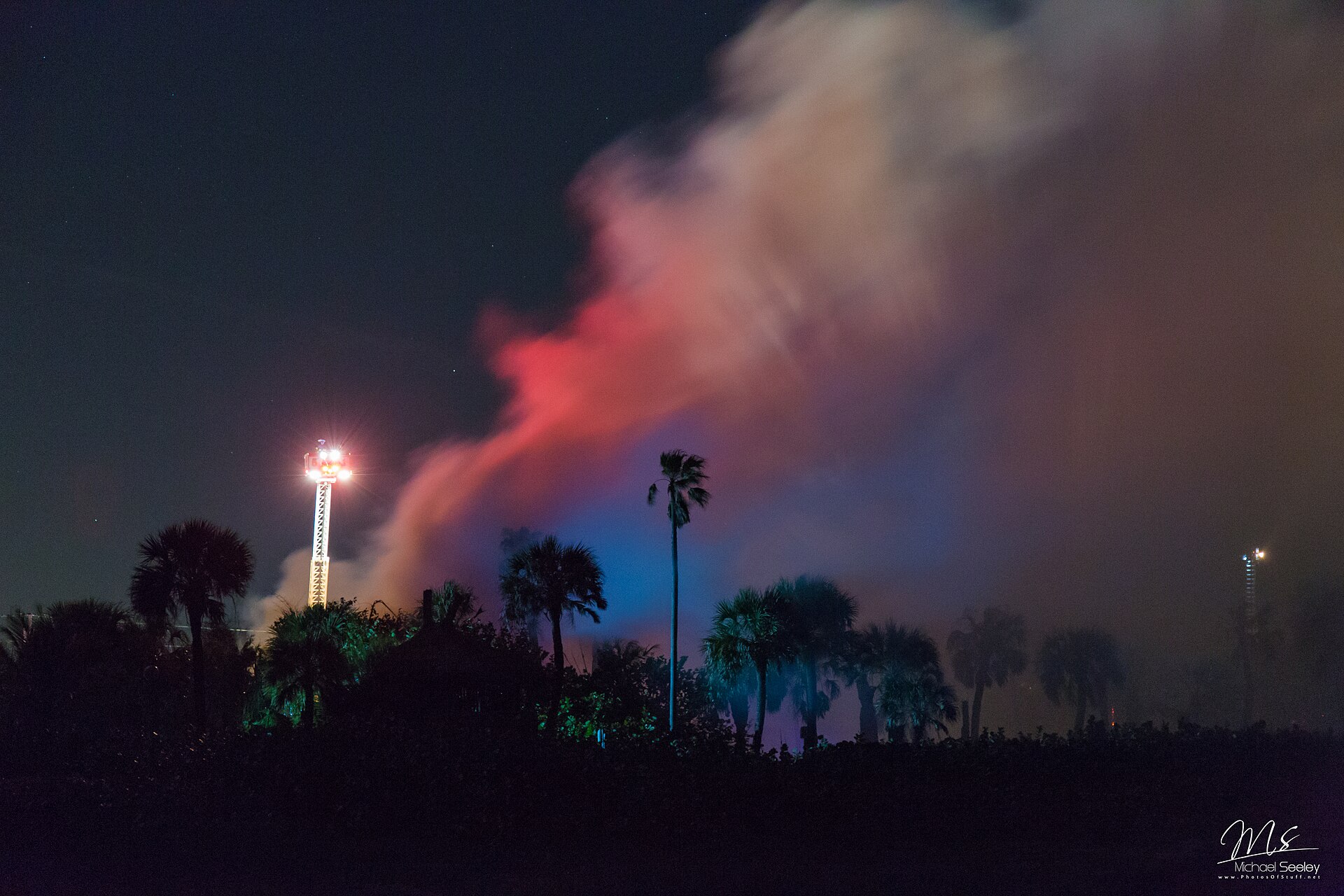
In March 1996 the Cocoa Beach Pier caught fire. The blaze started in the restaurant kitchen at the seaward end, spread through the wooden bar and concession structures, and burned long enough that fire crews from Cocoa Beach, Cape Canaveral, Cocoa, and Patrick Air Force Base were all on scene before it was contained. By the time the fire was out, roughly half of the pier’s commercial structures were destroyed. The pilings and main walkway were undamaged. The rebuild took about 18 months. The total cost, by the contemporary estimates running in Florida Today, was approximately $2.5 million in 1996 dollars (about $5 million in 2026).
This was the single most expensive non-hurricane event in the Cocoa Beach Pier’s history. It was also, against expectations, the catalyst for the pier’s modern era.
The fire
The blaze started in the kitchen of the seaward-end restaurant. The exact ignition source has been variously reported as a grease fire, an electrical fault, or a propane appliance malfunction; the official Cocoa Beach Fire Department investigation report (now archived in city records) attributed the initial ignition to a kitchen-equipment electrical fault. The wooden structure of the restaurant carried the fire fast. Within minutes the kitchen was fully engaged. Within an hour the entire restaurant block was on fire.
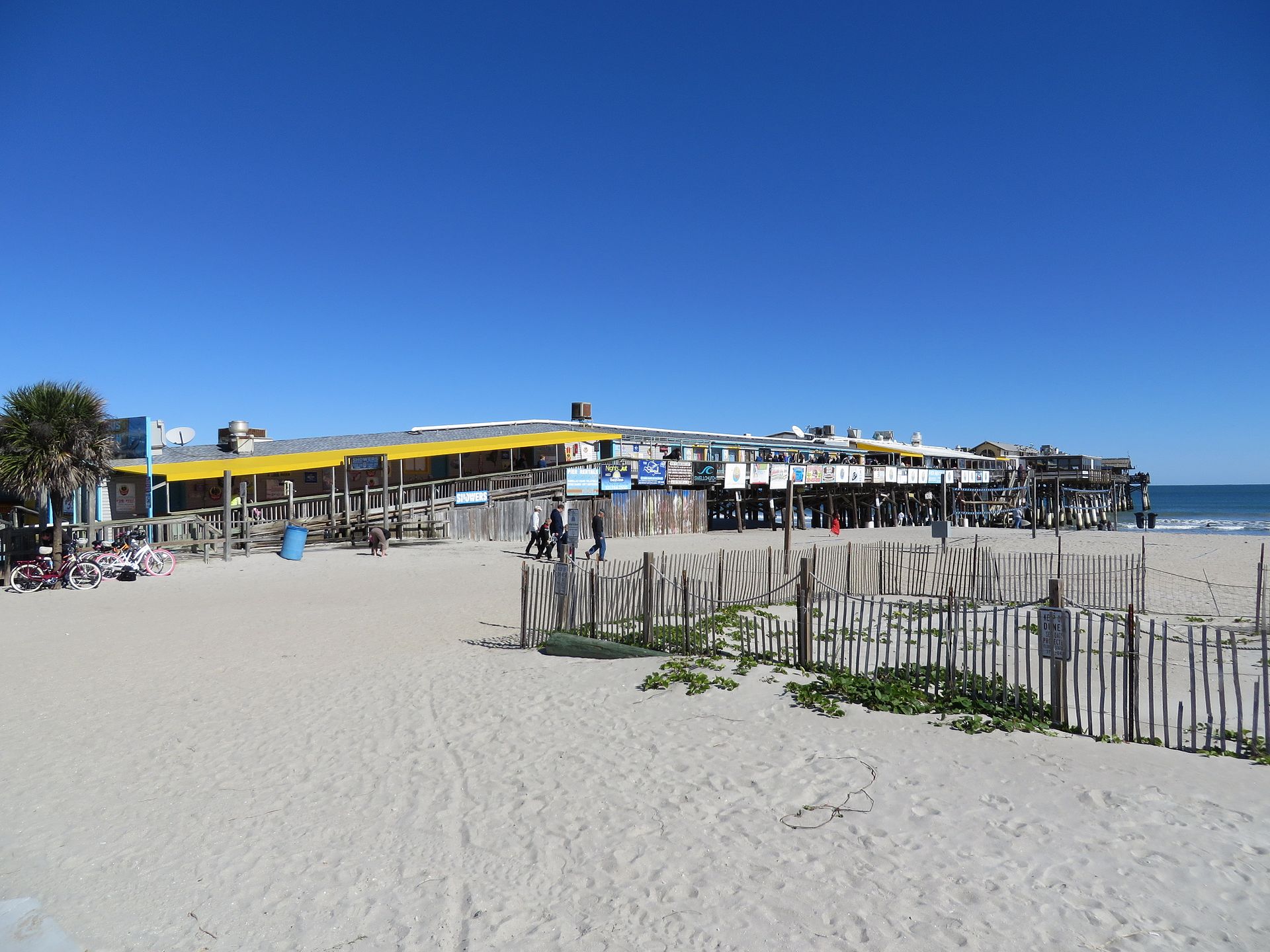
The pier’s geography helped and hurt. Help: the pier extends 800 feet into the Atlantic, so the fire was geographically isolated from the rest of Cocoa Beach. No adjacent buildings were threatened. Hurt: the seaward end of the pier is hard to fight from. Fire trucks could position on the beach end of the pier but had to run hose lines down the length of the walkway, with limited water pressure at the seaward end. Some of the firefighting effort came from the ocean side, via Cocoa Beach Fire Department personnel deployed in inflatable craft and from positions on the beach below the seaward structures.
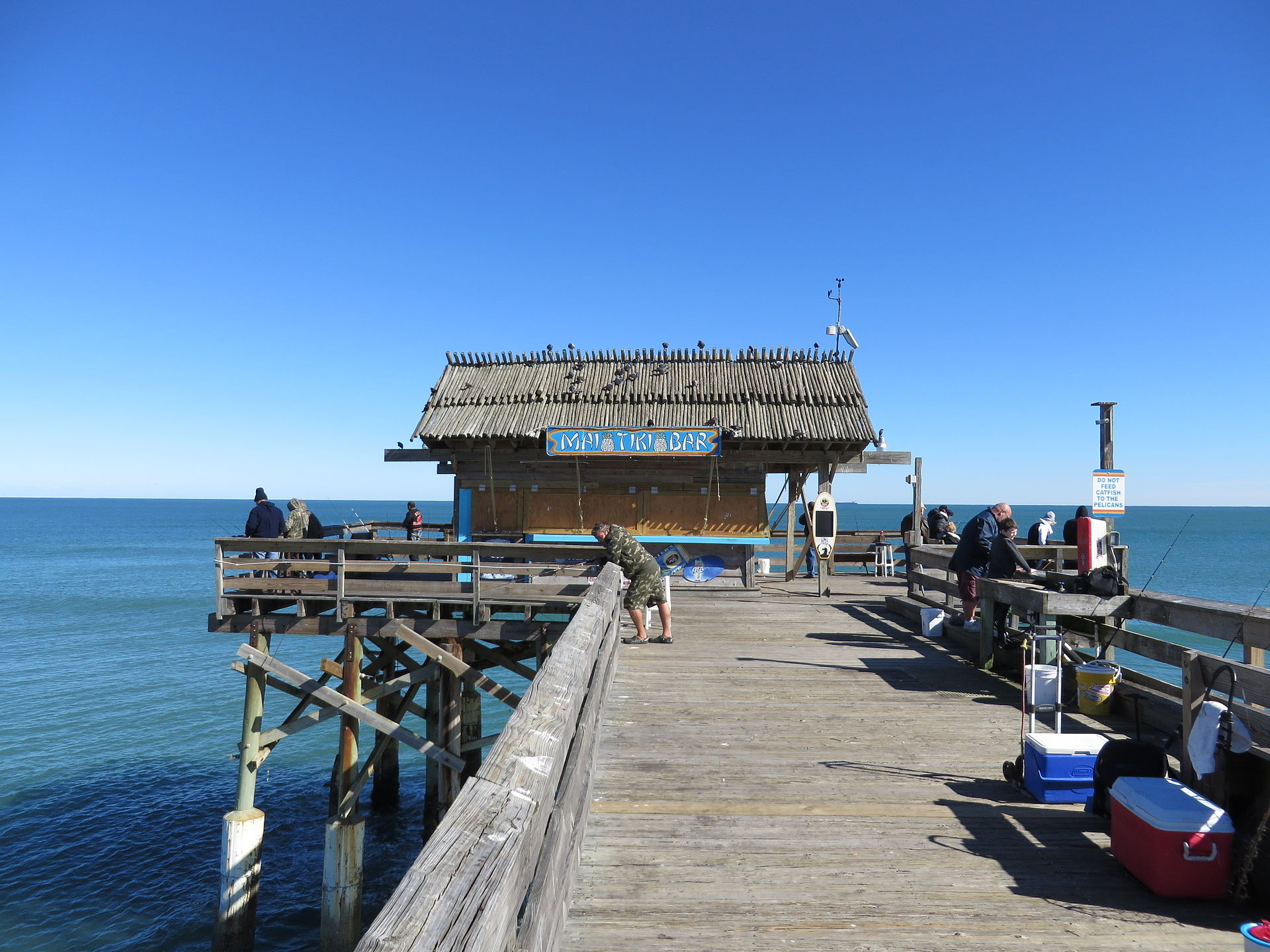
The fire burned for several hours. By the time crews fully contained it, the entire seaward restaurant block, the bar, the gift shop, and several adjacent concession structures were destroyed. The main pier walkway, the pilings, the bait shop near the beach end, and the parking lot infrastructure on shore were undamaged. No deaths or serious injuries were reported.
The aftermath
The morning after the fire, the pier was closed indefinitely. Cleanup and debris removal took several weeks. Insurance assessment, structural engineering review of the remaining pier (to confirm the pilings hadn’t been weakened by heat exposure), and demolition planning took several months. Active rebuild construction started in mid-1996.
The owners, the Stottler family estate by 1996, with operational management contracted to a series of operators, faced the same question every disaster-rebuild owner faces: rebuild what was there, or use the insurance settlement to redesign for current code and current commercial conditions? They chose mostly to rebuild what was there, with code updates and a few design changes.
Code updates included:
- Substantially improved fire-suppression systems, including sprinkler systems in the new commercial structures and improved standpipe access along the pier deck
- Updated electrical systems with arc-fault protection
- New propane storage protocols
- Better separation between the restaurant kitchen and the adjacent bar/seating areas
Design changes included:
- A slightly enlarged restaurant footprint
- A more open bar layout
- Expanded outdoor deck seating with weather-protected canopy
- Updated signage and lighting
The new structures opened in stages between late 1996 and mid-1997. By the end of 1997 the pier was fully operational, with the restaurant and bar back in business and the gift shop, bait shop, and other concessions running.
The commercial recovery
The pre-fire pier had been in a slow commercial decline through the late 1980s and early 1990s. The 1979 hurricane David damage, ongoing maintenance costs, increased competition from newer restaurants in Cocoa Beach proper, and the general post-Apollo tourism slowdown had pressured pier revenue. The fire was, in a perverse way, the catalyst for the pier’s modernization.
The rebuilt structures attracted new operators with more capital and more contemporary concepts. The restaurant rebranded multiple times in the 1997 to 2014 period, Pierside Grill, Sandbar at the Pier, various others, under different operators trying various market positions. The bar at the head of the pier became a more aggressive tourist-and-event-oriented operation than the pre-fire version had been.
Foot traffic grew through the late 1990s and 2000s. By the early 2010s the pier was again the social center of Cocoa Beach in a way it hadn’t been since the Apollo era. The 2014 acquisition by Westgate Resorts ($5.4 million, the same purchase discussed in our pier history piece) capped this commercial recovery: a major hospitality company saw the pier as an asset worth acquiring, integrating with the adjacent Westgate Cocoa Beach Pier Resort, and continuing to develop.
What the fire ultimately meant
In the short term: a wrecked pier and an expensive rebuild.
In the medium term: a modernization that the pre-fire trajectory wouldn’t have produced organically. The fire forced an investment cycle that brought the pier back to commercial vitality and set up the next two decades of growth.
In the long term: a reminder that wood, salt water, and commercial kitchens are a long-term incompatibility. The 1996 fire wasn’t the first or last fire-risk event at the pier. Smaller fires have occurred since. Each one prompts another round of fire-suppression updates and code reviews. The pier in 2026 has substantially better fire defenses than it did in 1996, but it is still a wooden structure with multiple commercial kitchens running over an ocean fifteen miles from the nearest mainland.
Hurricane damage will continue to be the larger structural risk. Fire damage will continue to be the larger acute-loss risk. The owners and the city’s risk-management apparatus understand both. The pier remains exposed to both and continues to operate anyway, which is, in different words, the operational thesis of every barrier-island commercial structure on the Brevard coast.
The pier’s pre-fire identity
The structure that burned in 1996 was, in its bones, a 1962 build. The pier opened that year as the Cape Canaveral Pier, a name it kept through the early Apollo years before the surrounding municipality and the pier itself rebranded around the Cocoa Beach identity. By the time of the fire, the pier had been operating for 34 years, a substantial run for a wood-deck, salt-immersed commercial structure on the Brevard barrier strip. Three and a half decades of marine exposure, saltwater corrosion at the pile sleeves, repeated hurricane stress (Donna in 1960 had wrecked the prior fishing infrastructure on the same site, and David in 1979 had damaged the rebuilt pier’s seaward deck), and continuous commercial-kitchen operations on a wooden platform were the long-running variables. The 1996 fire was an acute event on top of a chronic load.
The pier’s original kitchen and bar layout, finished in the early 1960s, had been incrementally modified through five successive operators between 1962 and 1996. By the time the fire started, the rear of the kitchen contained electrical wiring runs from at least three distinct construction eras, a recurring failure pattern in long-operated coastal commercial buildings. Post-fire forensic teardown of the seaward block confirmed multiple non-contemporary wiring vintages, a finding that fed directly into the rebuild’s electrical-isolation requirements.
Why the recovery cycle compressed in time
The pier’s commercial recovery between 1997 and 2014 mapped to a measurable shift in Cocoa Beach’s population trajectory. US Census decennial counts record Cocoa Beach at 12,123 residents in 1990 and 12,482 in 2000, the city’s all-time population peak, before falling to 11,231 by 2010 (US Census Bureau, decennial census counts). The pier reopened into the back half of that peak, capturing year-round resident traffic plus the rising day-tripper market from Orlando’s tourism corridor 50 miles inland. Brevard County overall grew from 398,978 residents in 1990 to 476,320 by 2000, a 19.4% jump that added meaningful catchment within an hour’s drive of the pier (US Census Bureau, Brevard County decennial counts). The rebuild landed in the right years.
The 2004 Atlantic hurricane season tested the rebuilt structures. Hurricane Frances made Florida landfall on September 5, 2004 at the south end of Hutchinson Island as a Category 2 with peak winds near 105 mph, producing severe beach erosion from Vero Beach north to Cocoa Beach (NHC Tropical Cyclone Report, Frances, Beven, 2004). Hurricane Jeanne struck the same Hutchinson Island stretch three weeks later on September 26 as a Category 3 with 120 mph sustained winds, with hurricane-force winds extending from Stuart to Cape Canaveral (NHC Tropical Cyclone Report, Jeanne, Lawrence and Cobb, 2005). The pier’s rebuilt commercial structures, designed to post-1996 code with stronger anchoring and updated fire suppression, survived both storms with repairable damage rather than the catastrophic structural loss that hit several older A1A buildings the same season.
Further Reading
Sources
- Florida Today archives, March and April 1996 (Brevard County Library microfilm)
- Cocoa Beach Fire Department, fire investigation report archived in city records
- City of Cocoa Beach building permit records, pier reconstruction 1996 to 1997
- Florida Today coverage of Westgate acquisition, December 2013 to early 2014
- Brevard County Property Appraiser, pier parcel records and improvement history
As an Amazon Associate we earn from qualifying purchases.