The Beach Boys, surf rock, and Cocoa Beach's pop-culture footprint
What the Beach Boys actually had to do with Cocoa Beach (less than the legend says), what the town's surf-rock connection actually is, and how I Dream of Jeannie put Cocoa Beach on prime-time American TV without ever shooting there.
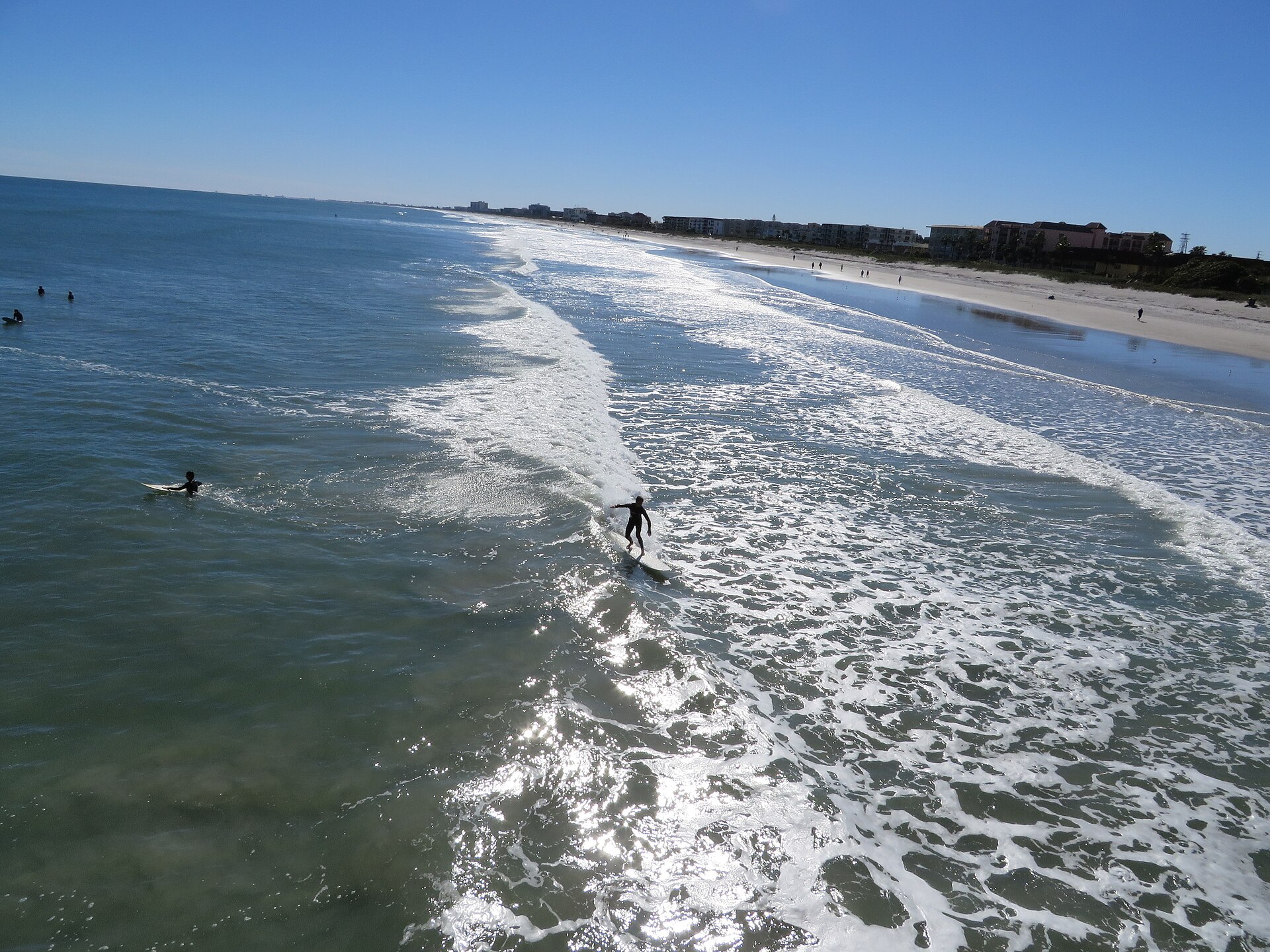
If you ask a casual American about Cocoa Beach pop culture, you’ll hear two answers: the Beach Boys and I Dream of Jeannie. The Beach Boys answer is mostly wrong. The Jeannie answer is mostly right, with one big caveat: the show was set in Cocoa Beach but shot in Los Angeles, and the town never appears on screen. The Cocoa Beach the 1960s nation imagined was a Hollywood backlot. The Cocoa Beach the actual surfers and astronauts inhabited was hotter, sandier, and almost entirely absent from the surf-rock canon.
The honest answer to “what’s Cocoa Beach’s pop-culture footprint” is more interesting than the lazy answer. Here’s what the documentary record actually shows.
The Beach Boys, mostly elsewhere
The Beach Boys, Brian, Carl, and Dennis Wilson, Mike Love, Al Jardine, formed in Hawthorne, California, in 1961 and built their early discography around Southern California surf culture. Surfin’ (1961), Surfin’ Safari (1962), Surfin’ U.S.A. (1963), Surfer Girl (1963), Little Deuce Coupe (1963), All Summer Long (1964), and the rest of the early catalog name-check California beaches, California cars, and California schools. Florida is absent.
The single explicit Beach Boys reference to a Florida-style beach culture is in Surfin’ U.S.A. (March 1963), the song that lists surf spots across the United States. The lyrics name “Doheny Way, Trestle, Australia’s Narrabeen, all over Manhattan and down Doheny Way” with no Florida-specific spot beyond a general “all over Florida” implication. Cocoa Beach gets no name-check. Neither does any other Brevard County beach.
The Florida surf-rock genre that paralleled and competed with the Beach Boys had its own bands: The Trade Winds, The Surf Riders, regional acts that played the Florida circuit through the 1960s without breaking nationally. None of them got the kind of national radio play that California-based acts did. The result is that the “surf rock” sound America associates with the 1960s is overwhelmingly Californian, and Cocoa Beach, despite being a real and growing surf culture at the same time, never produced an iconic surf-rock band of national reach.
The Beach Boys did eventually play Cocoa Beach. The Cocoa Beach Pier hosted concerts through the 1970s and 1980s. Multiple sources put the Beach Boys on the pier or at nearby venues in the late 1970s, with the surviving members and various touring lineups passing through the East Coast circuit. These weren’t formative appearances. They were tour stops by the time the band was a nostalgia act.
So: the Beach Boys-Cocoa Beach connection is real, in the sense that the band toured there, but it’s a loose connection. The town’s pop-culture brand attached itself to surf-rock at large rather than to a specific band, song, or event.
I Dream of Jeannie, the bigger imprint
NBC’s I Dream of Jeannie ran from September 18, 1965 through May 26, 1970 for 139 episodes across five seasons. The premise: Captain Anthony Nelson (Larry Hagman), a NASA astronaut, finds a bottle on a desert island after his space capsule splashes down, the bottle contains a 2,000-year-old genie (Barbara Eden), they return to NASA, and the show plays out as a sitcom built on the astronaut-genie cohabitation.
The show was set in Cocoa Beach. Captain Nelson lived in Cocoa Beach. NASA’s “Cocoa Beach” base, as portrayed in the show, was the imagined version of Cape Canaveral / Kennedy Space Center. Every episode placed Hagman’s character in or near “Cocoa Beach, Florida.”
The show was shot entirely in Los Angeles. The exterior establishing shots used stock footage of NASA and Florida. The interior scenes used Hollywood soundstages. None of the principal cast, Hagman, Eden, Bill Daily, Hayden Rorke, filmed in Cocoa Beach for the show’s run. The town itself never appears on screen except in archival/establishing inserts.
That mattered less than you might expect. Jeannie gave Cocoa Beach a national TV mention every week for five seasons, in 139 episodes, often multiple times per episode. By the end of the run, the show had run on first-run national network television, gone into syndication, and been seen by tens of millions of Americans. Most of them couldn’t tell you exactly where Cocoa Beach was, but they knew the name. Jeannie did more to make “Cocoa Beach” a recognizable American place name than any single piece of media before or since.
Cocoa Beach got involved with the Jeannie legacy decades later. In 1996, on the show’s 30th anniversary, the city installed an “I Dream of Jeannie Lane” street sign on Atlantic Avenue, with the sign commemorating the show’s setting. The sign is at A1A and Sheldon Cove, just north of the Cocoa Beach Pier. It’s a tourist photo stop. Barbara Eden visited Cocoa Beach in 1996 for the unveiling.
The fictional astronaut, set in the imagined Cocoa Beach, ended up giving the real town a national identity that the real astronauts didn’t quite produce on their own.
Other 1960s pop-culture touches
A few other items belong in the same era:
The Marvelettes’ Beechwood 4-5789 (1962) and other Motown hits referenced the Florida tourism scene generically without naming Cocoa Beach. The early-60s Florida-tourist imagery was a generic East Coast beach-tourist trope, not a Cocoa Beach-specific one.
Surfer films of the 1960s: The Endless Summer (1966, directed by Bruce Brown) followed two California surfers around the world. The film’s East Coast segment featured Cape Hatteras, North Carolina, not Cocoa Beach. The Florida segment, when there was one in lesser-known surf films of the era, tended to be New Smyrna Beach for wave quality.
The Tonight Show with Johnny Carson segments on Apollo launches sometimes featured Cocoa Beach motels and bars as the spectator scene. Carson himself was at the Apollo 11 launch in July 1969 and reported on the experience the following week. These weren’t Cocoa Beach-set bits; they were New York and Los Angeles studio shows that occasionally cut to or referenced the Brevard coast.
The 1996 Tom Hanks/Ron Howard film Apollo 13 featured shots filmed in or near Cocoa Beach for authenticity. The film’s astronaut-family scenes were shot partially in Brevard County, including footage of period-correct 1960s-style Cocoa Beach exteriors.
The 21st century inheritance
In 2026, Cocoa Beach’s pop-culture footprint is more diverse and less concentrated than the 1960s peak. The town appears in:
- Tourism marketing photographs in airline magazines and travel media
- Reality TV competition episodes (multiple)
- Various NASCAR-adjacent content (NASCAR’s Daytona is an hour north)
- Surfing documentary content centered on Kelly Slater
- Music videos by country artists who film East Coast beach segments
None of these is a singular cultural moment of the Jeannie scale. The Cocoa Beach in 2026 American media is a generic Florida-beach signifier, recognized but not iconic, present in passing rather than centered.
The 1960s peak is unlikely to repeat. The cultural moment when a single town could become nationally known through a hit sitcom and a missile program is over. What’s left is a name that Americans recognize, a sign at A1A and Sheldon Cove, and a permanent line in surf-history reference works as Kelly Slater’s hometown.
That’s not a small inheritance. It’s just smaller than the lazy “Beach Boys and Jeannie” version of the story makes it sound.
Further Reading
Sources
- The Beach Boys, discography and tour records via Brian Wilson archives and Capitol Records
- I Dream of Jeannie, production credits and broadcast records, Sony Pictures Television (current rights holder via Screen Gems / Sidney Sheldon Productions)
- Cocoa Beach city records, “I Dream of Jeannie Lane” street naming, 1996
- Brevard County tourism marketing archives
- Surfing Heritage and Culture Center, surfingheritage.org
As an Amazon Associate we earn from qualifying purchases.