Cocoa Beach Junior-Senior High School and the Minutemen
Cocoa Beach High School opened in 1965 because contractor families had kids. The school's nickname, the Minutemen, is one of the few Cocoa Beach institutions named directly after the Cold War missile program. Six decades of FHSAA history.
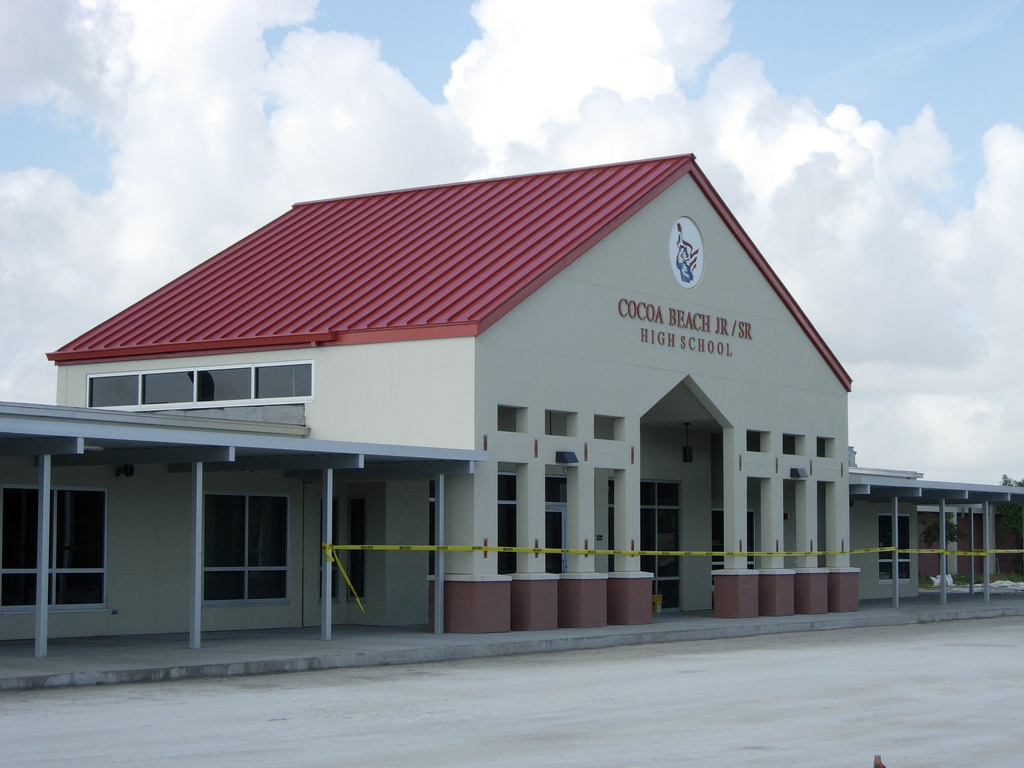
Cocoa Beach Junior-Senior High School opened in 1965. The school’s nickname, the Minutemen, was chosen at opening to reference the Cold War-era LGM-30 Minuteman intercontinental ballistic missile, the first solid-fuel ICBM, then in operational deployment by the U.S. Air Force and tested at the nearby Cape Canaveral facilities. The choice was unsubtle. The town was an astronaut-and-missile town in 1965; the school was the children of the astronaut-and-missile workers; the missile-name nickname declared what the town actually was.
Six decades later the Minutemen mascot is still in use. The school still operates at the same Cocoa Beach campus. The Cold War context is mostly forgotten. The football team still plays in the FHSAA Florida high school athletic system. Several Cocoa Beach alumni are recognizable national figures, including the most famous local product, Kelly Slater (Class of 1990).
Why 1965, why a high school, why on the barrier strip
Through the 1950s and into the early 1960s, Cocoa Beach kids went to school on the mainland in Cocoa, riding the school bus across the Banana River causeway. The 1950 federal census recorded 246 Cocoa Beach residents; the school-aged population was a few dozen kids, easily absorbed into mainland schools.
By the early 1960s the math had changed. The Mercury and Gemini programs had brought thousands of contractor families to Brevard, with disproportionate concentration in Cocoa Beach. The school-aged population on the barrier strip was approaching the thousands. Bus transportation across the causeway was overstretched, and the mainland Cocoa schools were themselves at capacity.
The Brevard County school district authorized a new junior-senior combined high school on the barrier strip. Land was acquired on what is now Minutemen Causeway (the street name was later changed to reference the school nickname), construction proceeded through 1963 and 1964, and the school opened in fall 1965 with roughly 800 students across grades 7 through 12.
The original 1965 building has been expanded and renovated multiple times. The campus now includes the main academic building, athletic facilities (football field, baseball diamond, gymnasium, track), and ancillary structures. The school in 2026 enrolls approximately 1,200 students across grades 7 through 12.
The Minutemen
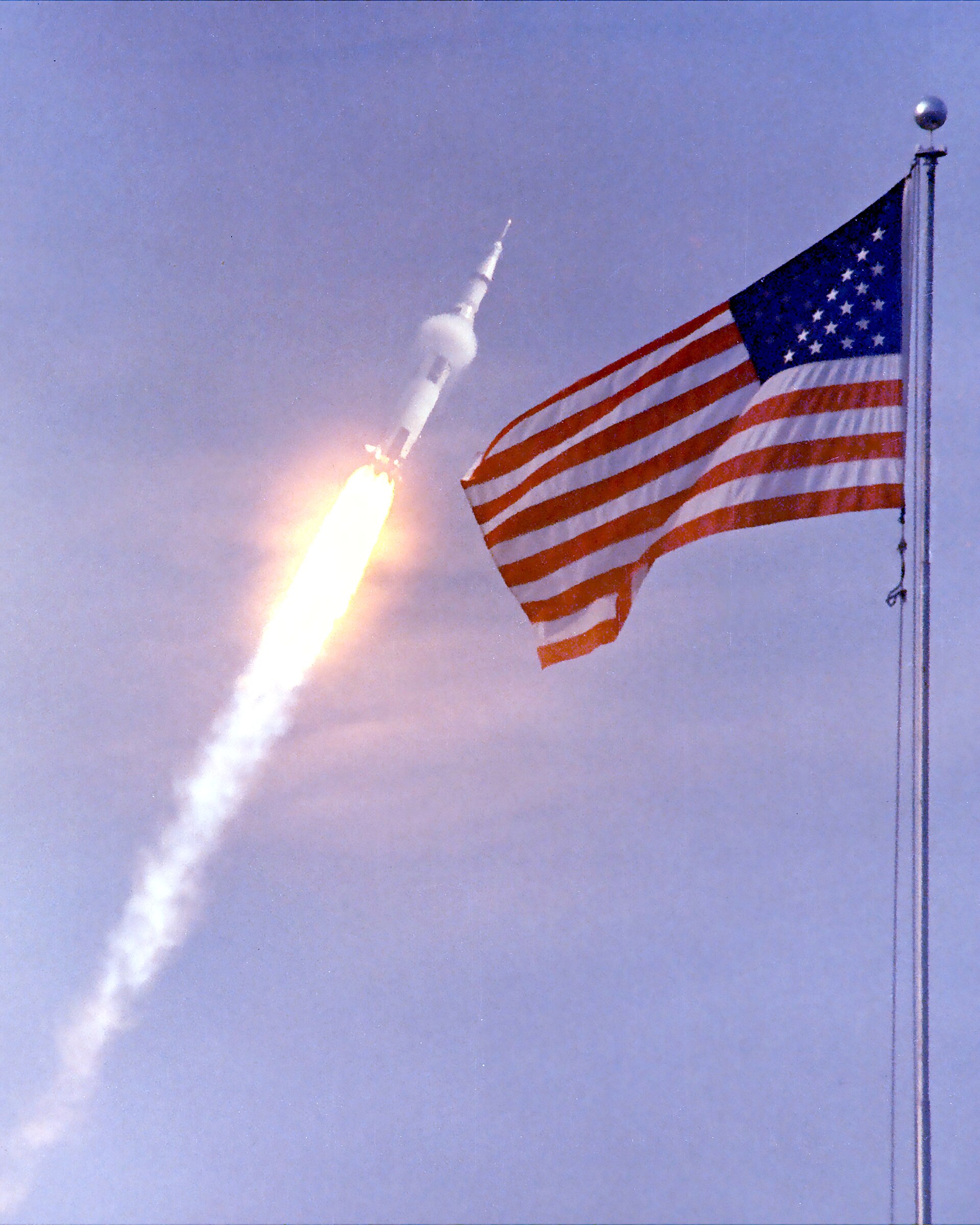
The nickname choice at opening was specifically tied to the LGM-30 Minuteman missile, deployed beginning in 1962, then a centerpiece of U.S. nuclear deterrent. Cocoa Beach in 1965 was tightly linked to missile testing, Patrick AFB had been the missile-program logistics base since 1950, and various missile families had been flight-tested from Cape Canaveral throughout the 1950s and into the 1960s. The Minutemen name was, in school-board minutes from 1964, explicitly described as honoring “the missile that defends the nation.”
A secondary association, to the Revolutionary War colonial militia “Minutemen” who fought at Lexington and Concord, has, in subsequent decades, become the more prominent public framing for the nickname. The mascot character, the school logo, and most current marketing materials use Revolutionary War imagery rather than missile imagery. This shift has been gradual and partly unintentional; the original Cold War missile context faded as the Cold War ended in 1991 and the missile name became less recognizable to incoming students.
In 2026, both associations coexist, with Revolutionary War-themed mascot graphics dominant but missile-program backstory remembered by older alumni and by anyone who looks up the school’s history.
FHSAA athletic history
Cocoa Beach Minutemen athletic teams compete in the Florida High School Athletic Association (FHSAA), the state’s sanctioning body for interscholastic athletics, currently in Class 3A for football and various classes for other sports depending on enrollment.
The football program has fluctuated over the decades. The early years (late 1960s through 1980s) were modest, the school’s small enrollment limiting competitiveness against larger mainland Brevard schools. Several distinct runs of competitive seasons have occurred, including a deep 1990s playoff run, with championship-game appearances that fell short of state titles.
Other sport highlights:
- Boys soccer: multiple district and regional titles across decades; competitive program
- Boys and girls swimming: strong programs at the smaller-school classifications; multiple state-meet qualifiers
- Track and field: consistent district-meet performance
- Tennis: respectable performance reflecting the school’s beach-recreation demographics
Surfing: the school competes in the Florida high-school surfing organization (now folded into broader extracurricular surf competition), with Cocoa Beach Minutemen surfers regularly placing at state and national levels. Kelly Slater competed for the Cocoa Beach Minutemen team during his high-school years (graduating in 1990), as part of the broader Brevard surfing pipeline that fed his early professional career.
Kelly Slater and other notable alumni
The single most famous alum is Kelly Slater (born February 11, 1972), Class of 1990. Slater attended Cocoa Beach Junior-Senior High School through 12th grade, surfed for the school and on the ESA amateur circuit, and turned professional at age 18 shortly after graduation. The school maintains a quiet acknowledgment of Slater’s connection, yearbook references, athletic-hall-of-fame mentions, occasional press requests, without making it a major identity point.
Other Cocoa Beach alumni who have achieved national recognition include various surfers (Sean Slater and Stephen Slater, Kelly’s brothers, both Cocoa Beach alums and competitive surfers themselves), a handful of military and aerospace professionals (the school’s proximity to Patrick and the Cape feeds a steady stream of alums into military and contractor careers), and various local-level Brevard political figures.
The school doesn’t have a Hall of Fame at the institutional scale that some larger Florida high schools maintain. Alumni recognition is informal and ad-hoc.
The school in 2026
Cocoa Beach Junior-Senior High School in 2026 is a stable, mid-sized Brevard County school. Enrollment is roughly 1,200, on a small but growing trajectory as Cocoa Beach’s residential population has grown modestly. Demographics reflect the surrounding community: predominantly White, with growing Hispanic enrollment, modest African-American representation, and a substantial military-family population from the nearby Patrick Space Force Base.
Academic performance has been consistent: the school’s standardized-test averages and FCAT (Florida Comprehensive Assessment Test) scores have generally tracked or exceeded Brevard County averages, with notable strengths in mathematics and science (reflecting the heavy contractor-family STEM background of much of the student body). Graduation rates exceed 90 percent.
The athletic facilities have been updated multiple times over the decades. The football field is on its third or fourth surface configuration; the gymnasium has been expanded. The campus is well-maintained relative to comparable Brevard schools, partly because Brevard County school funding has been adequate and partly because the local property-tax base supports it.
The Cold War missile mascot is more historical curiosity than active identity. The Revolutionary War mascot is functional. The surfing legacy is the most-discussed cultural feature, and Kelly Slater is, in 2026, the most prominent alum in the school’s history.
Further Reading
Sources
- Brevard Public Schools, district records, brevardschools.org
- Florida High School Athletic Association, fhsaa.org
- Cocoa Beach Junior-Senior High School official records, available through Brevard Public Schools
- Brevard County school board minutes, 1963 and 1964 (covering school construction and naming decisions)
- Florida Today archives, education section, 1965 to 2024
As an Amazon Associate we earn from qualifying purchases.