The Cocoa Beach Pier, opened 1962
Richard Stottler built an 800-foot wooden pier on the Cocoa Beach Atlantic side. It opened in 1962, survived hurricanes, partially burned, got rebuilt, and is now operated by Westgate Resorts. A history of the most photographed structure on the barrier island.
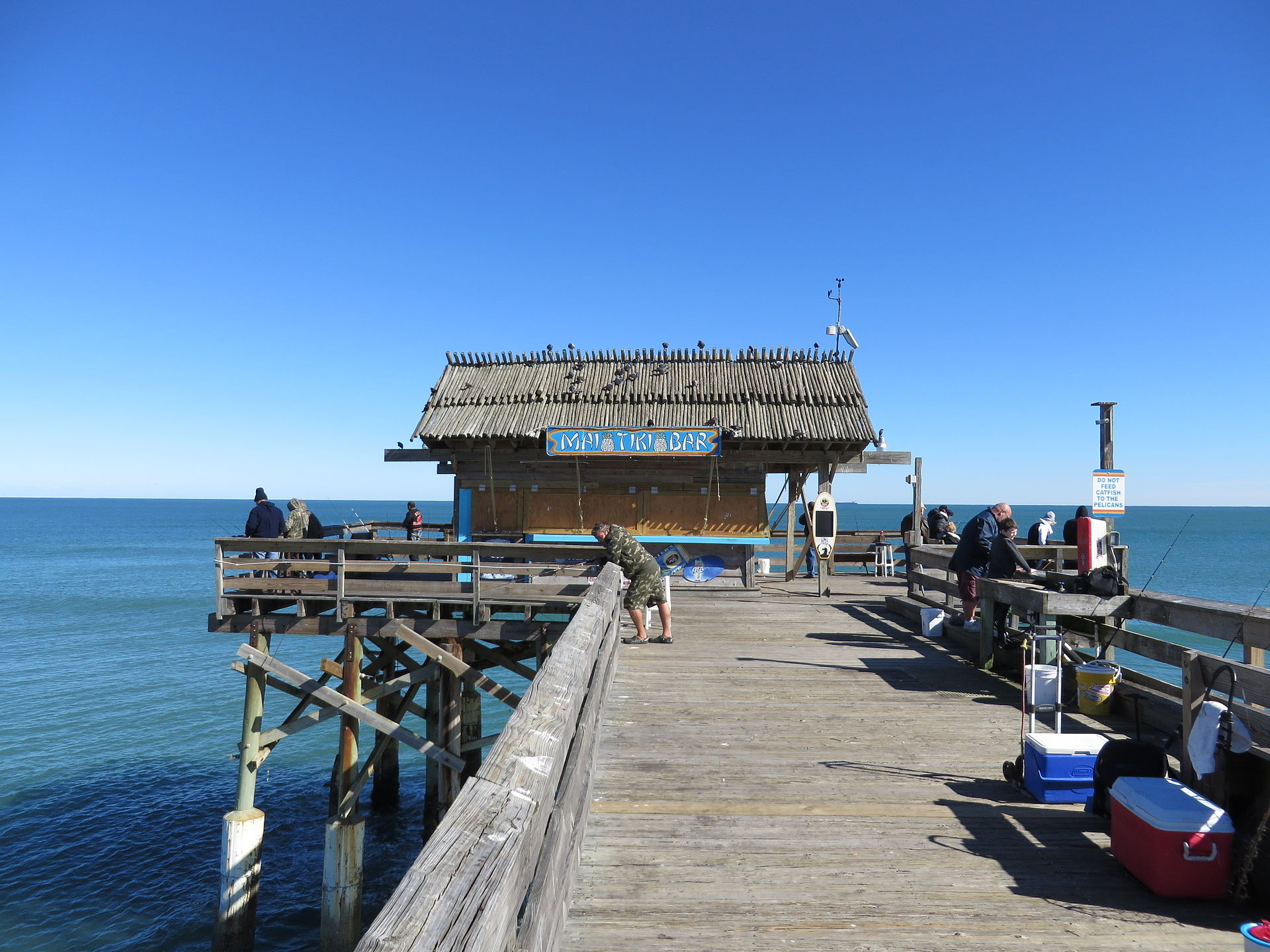
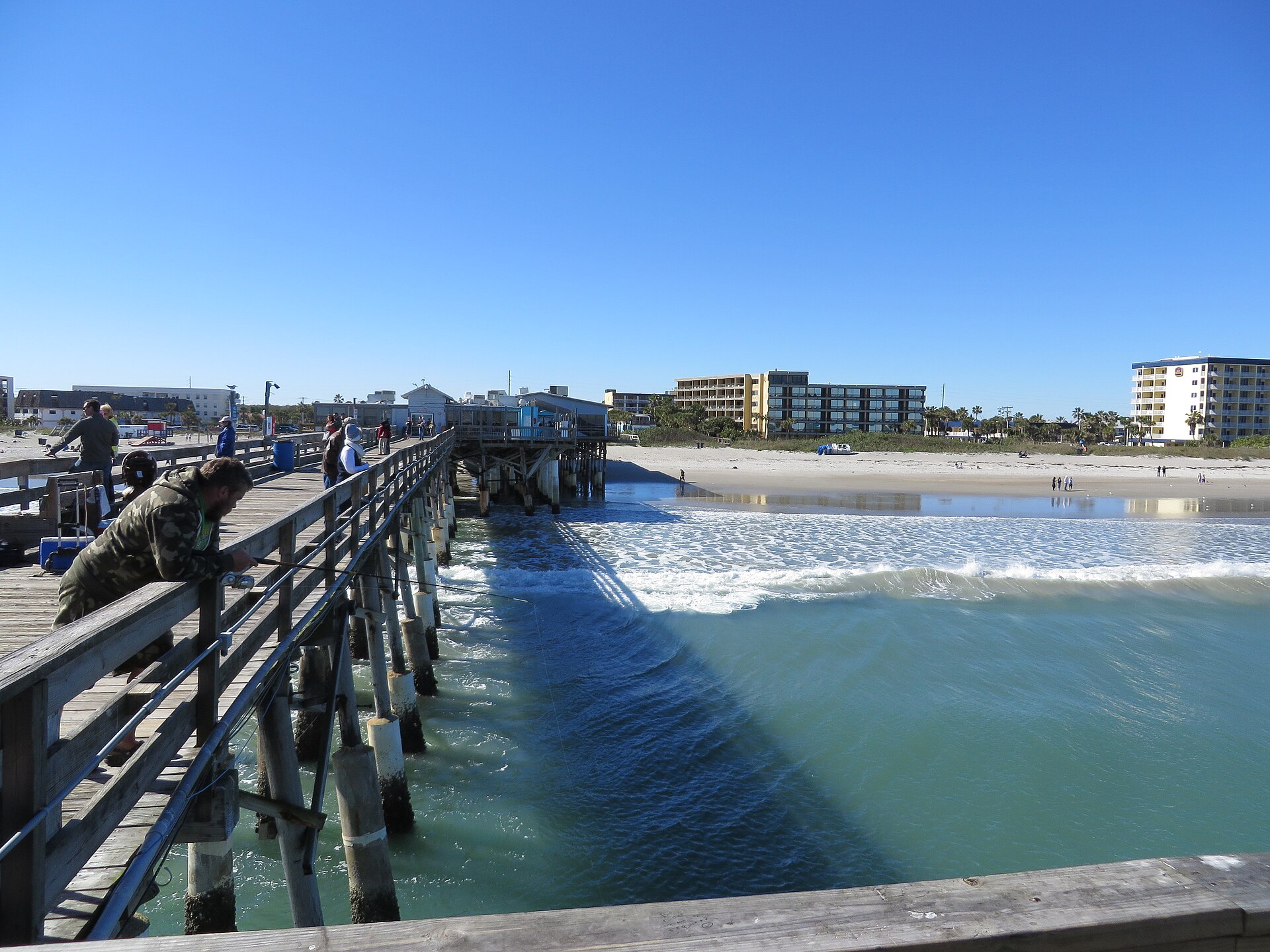
The Cocoa Beach Pier opened in 1962, an 800-foot wooden pier built by Richard Stottler over the Atlantic on Meade Avenue. It cost roughly $90,000 in 1962 dollars (about $950,000 in 2026 dollars), it was the first commercial fishing pier on the Cocoa Beach barrier strip, and it has been the most photographed structure in the town for more than sixty years. The Apollo-era crowds watched launches from it. The 1996 fire burned half of it. Westgate Resorts owns it now. It still operates seven days a week, charging a few dollars to walk out, more to fish, and renting tackle to anyone who didn’t bring their own.
The pier’s history is shorter than the town’s and easier to document, most of the major events made the local paper, and the City of Cocoa Beach’s archives keep the building permits and inspection records. What follows is the chronological version.
Why a pier, and why then
Cocoa Beach in 1962 had been growing for a decade on contractor labor and was about to grow much faster. Project Mercury had launched Alan Shepard in 1961 and John Glenn in February 1962. Apollo was being announced (Kennedy’s “we choose to go to the Moon” speech came September 12, 1962, four months before the pier opened). The town’s tourist economy was lifting off in parallel with the rocket program.
A fishing pier had been talked about locally for years. The Atlantic side of Cocoa Beach is a long, flat beach with no natural promontory; serious sport fishermen had to use boats or work the surf, both of which limited the casual visitor. A commercial pier solved that problem and gave the town a permanent visual landmark.
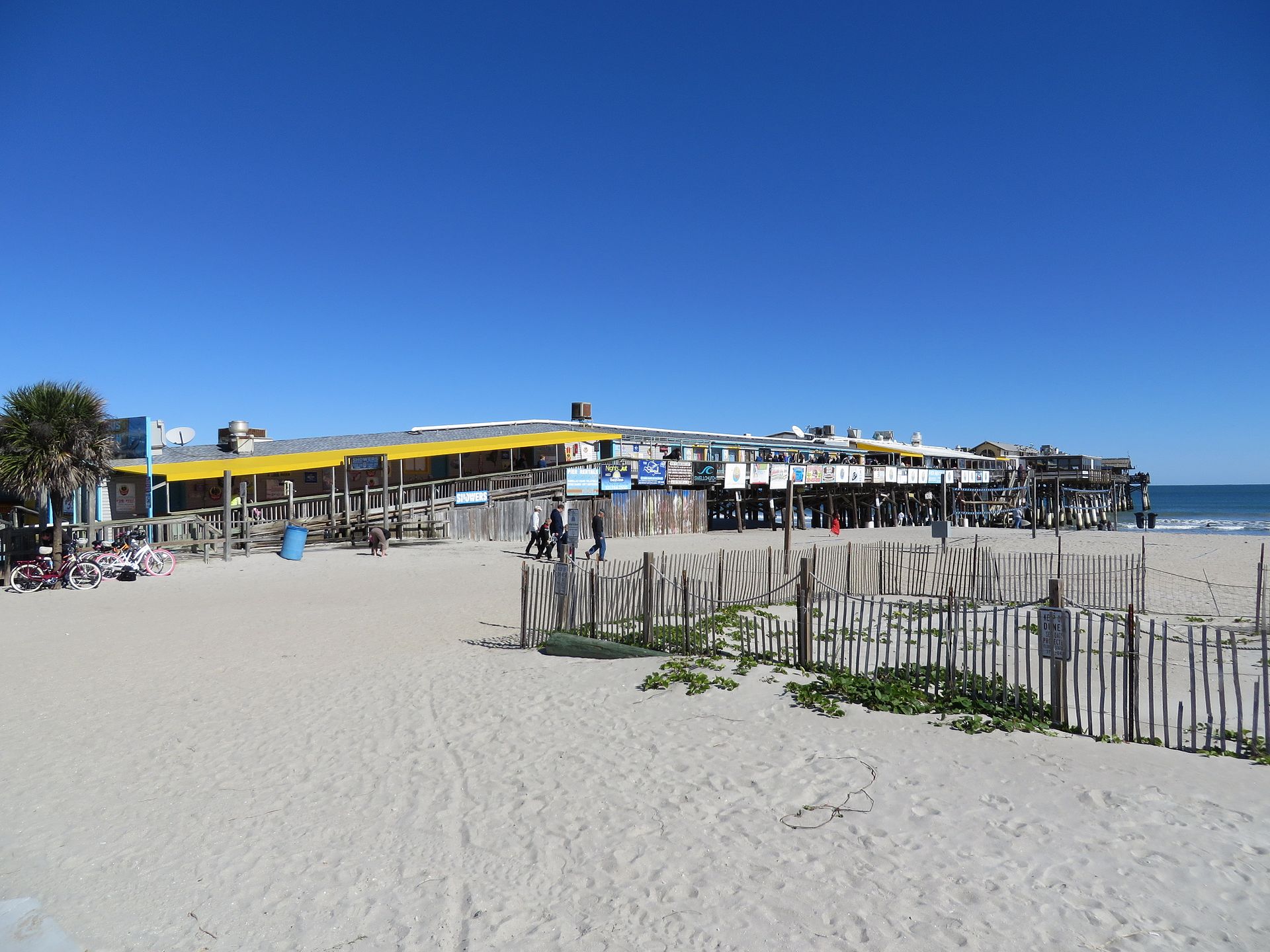
Richard Stottler, a local developer and businessman, assembled the financing in 1961 and 1962. The pier was built of treated pine pilings sunk into the seabed, with a wood-decked walkway and small structures at the seaward end. The first phase included a bait shop, a tackle rental, a fish-cleaning station, and a small restaurant. Subsequent phases added more concessions, a bar, and an enlarged restaurant footprint at the head of the pier.
The 1960s pier
The pier became, within months of opening, the casual social center of Cocoa Beach. Locals went out to fish (mackerel, snook, bluefish, occasional king mackerel and Spanish mackerel runs). Tourists went out for the view. Astronauts went out for the view. The pier was a documented Apollo-launch viewing spot, its line of sight north put the Saturn V launches into clear view across roughly fifteen miles of ocean, and the elevated deck got you above the dunes and crowds.
For Apollo 11 on July 16, 1969, the pier was packed. Contemporary reports from Florida Today and amateur photographs in the Florida Memory archive show the entire walkway full of spectators, with people sitting on the railing and standing in the bait shop. The pier survived the crowd weight without incident; it had been engineered for fishing-rod loads plus a reasonable concentration of people, and Apollo-launch crowds, however large, were transient.
Hurricane David, 1979
The first major test of the pier’s structural design came on September 3, 1979, when Hurricane David passed offshore of Brevard County as a Category 2 storm. Storm surge and wave action damaged the pier deck and dislocated several pilings near the seaward end. The repairs took several months and ran to several hundred thousand dollars (in 1979 dollars). The pier reopened in 1980.
David turned out to be a recurring pattern: hurricane damage, partial closure, repairs, reopening. The pier’s wooden construction is good for fishing pier economics but mediocre for storm survivability. Every major hurricane to track close to Brevard since 1979 has damaged the pier in some way: Erin and Opal in 1995, Floyd in 1999, Frances and Jeanne in 2004, Wilma in 2005, Matthew in 2016, Irma in 2017, Ian in 2022 (which closed the pier for major repairs through most of 2022 and early 2023).
The 1996 fire
The most dramatic single event in the pier’s history was the March 1996 fire, which broke out in the restaurant at the head of the pier, spread through the wooden structures along the seaward end, and burned for several hours before fire crews from Cocoa Beach, Cape Canaveral, and Patrick AFB could contain it. The fire destroyed approximately half of the pier’s commercial structures. The pilings and main walkway were undamaged by the fire itself; the restaurant, bar, and adjacent concessions were total losses.
Rebuilding took most of 1996 and 1997. The replacement structures were built in a similar wood-frame design, with updated electrical and fire-suppression systems. By 1998 the pier was fully operational again, and the restaurant, rebranded over the years and renamed multiple times, continued.
For the full account, see “The 1996 Cocoa Beach Pier fire”.
Ownership changes
The pier passed through several owners between Stottler’s death in 1989 and the present:
- Stottler family / estate ownership through the early 1990s, with operational management contracted out.
- A series of independent operators through the 1990s and 2000s. The pier’s commercial mix shifted over the years, more bar and restaurant, less serious sport fishing, reflecting Cocoa Beach’s tourist evolution.
- Westgate Resorts acquired the pier in 2014 for approximately $5.4 million. Westgate, an Orlando-based timeshare company controlled by David Siegel, also owns the Westgate Cocoa Beach Pier Resort directly adjacent to the pier and integrated the two operations. Under Westgate management the pier has been renovated, expanded, and rebranded; the pier is officially the “Westgate Cocoa Beach Pier” in 2026 marketing.
The Westgate purchase is well-documented in Florida real-estate filings and Florida Today coverage from December 2013 through 2014. The price, $5.4 million, reflected both the pier itself and the development rights to adjacent parcels.
What’s there now
The pier in 2026 is roughly the same physical structure as it was in 1962, with twenty-plus rounds of repairs, replacements, and reconstructions. The pilings are mostly replaced (treated wood in salt water doesn’t last forever). The decking is replaced regularly. The restaurant at the head, a multi-vendor operation including Rikki Tiki Tavern, the Surfside Tiki Bar, several beach-tourist food concessions, is the post-1996 rebuild plus Westgate-era additions.
Walking the pier costs a few dollars; fishing costs more; you can rent rods at the bait shop. The pier is open 24 hours during most of the year, though storm closures and post-hurricane repair periods are common. Live music plays at the Tiki Bar on weekend nights. Locals fish from the south rail at dawn. The same things that made the pier the social center of Cocoa Beach in 1962 still make it the social center today, including the fact that there’s nothing else quite like it on the Brevard barrier strip.
The Cocoa Beach Pier wasn’t planned as a monument. It was planned as a place to fish. Sixty-plus years later it functions as both, plus the unintentional visual brand of the town.
Further Reading
Sources
- City of Cocoa Beach official history, cityofcocoabeach.com/197/History
- Westgate Cocoa Beach Pier, cocoabeachpier.com
- Florida Today archives (Brevard County Library microfilm collection)
- National Hurricane Center storm reports for David (1979), Frances and Jeanne (2004), Matthew (2016), Irma (2017), Ian (2022), nhc.noaa.gov
- Florida Department of State, corporate filings for Westgate Resorts pier acquisition (2014)
As an Amazon Associate we earn from qualifying purchases.