Sea turtle nesting on Cocoa Beach and the dark-beach rules
Cocoa Beach is a major sea-turtle nesting beach. Loggerhead, green, and leatherback turtles all nest here. The FWC monitoring program, the city's dark-beach lighting ordinance, and what residents and visitors are legally required to do between May and October.
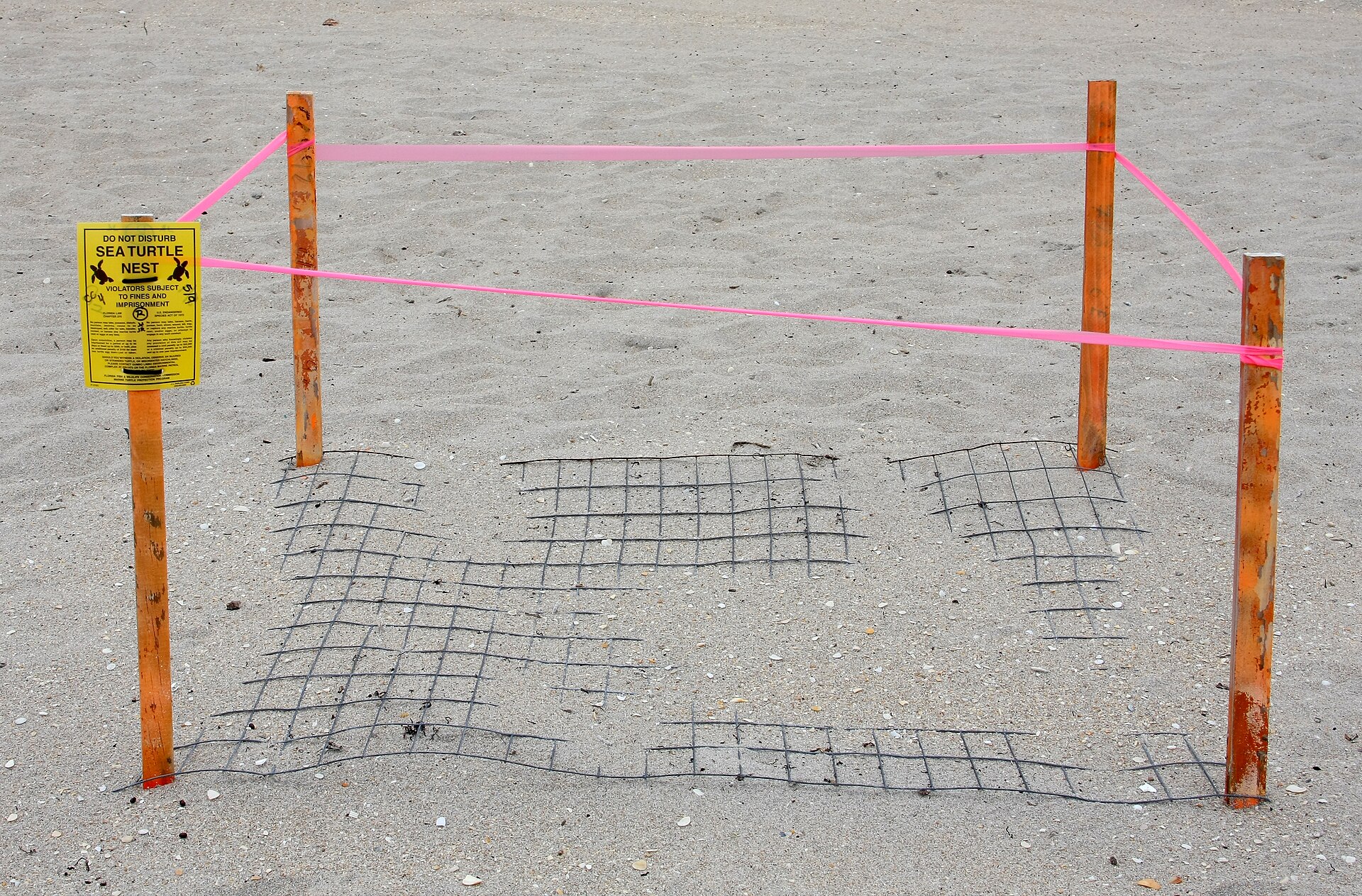
The Cocoa Beach barrier strip is one of the most heavily-used sea-turtle nesting beaches in the world. The Archie Carr National Wildlife Refuge, immediately south of Cocoa Beach on the same barrier strip, hosts more than a quarter of all loggerhead nests in the United States in some seasons. Cocoa Beach proper isn’t the densest part of the nesting beach (most of the highest-density nesting is south, in the unpopulated Archie Carr area), but the city’s roughly four miles of Atlantic beach support hundreds of nests per season.
The Florida Fish and Wildlife Conservation Commission (FWC) monitors the beach. The city enforces a strict dark-beach lighting ordinance. The Endangered Species Act protects the turtles federally. Between May 1 and October 31 every year, residents and visitors are legally required to follow specific rules, about lights, about beach equipment, about not touching anything, or face federal and state penalties that can include fines and, in egregious cases, criminal charges.
The three nesting species
Three sea-turtle species regularly nest on Cocoa Beach:
Loggerhead turtle (Caretta caretta). The most common nester. Loggerheads are federally listed as threatened. Brevard County beaches host the largest loggerhead nesting aggregation in the United States. Average nest count for Brevard county in recent seasons is on the order of 15,000 to 20,000 loggerhead nests per year; Cocoa Beach proper accounts for a few hundred of those, with the bulk in the Archie Carr area to the south. Loggerhead nests typically incubate 50 to 60 days; hatchlings emerge between July and October.
Green turtle (Chelonia mydas). Less common than loggerheads but a substantial nester on Brevard beaches. Florida green-turtle populations are federally listed as threatened (the Florida breeding population was formerly listed as endangered, downlisted in 2016 after recovery). Green-turtle nesting peaks slightly later in the season than loggerheads.
Leatherback turtle (Dermochelys coriacea). Less common, much larger animals (adults can exceed 1,500 pounds). Federally listed as endangered. Leatherbacks nest earliest in the season (April and May) and use beaches with steeper berm profiles, which not every section of Cocoa Beach provides.
Kemp’s ridley and hawksbill turtles are reported occasionally in Brevard waters but rarely nest on Cocoa Beach itself.
The FWC monitoring program
The FWC, in cooperation with U.S. Fish and Wildlife Service, the University of Central Florida’s Marine Turtle Research Group, and local volunteer organizations, monitors the Brevard barrier-island beaches throughout nesting season. The standard monitoring protocol:
- Trained surveyors walk the beach in early morning, before sunrise traffic disturbs tracks
- New nesting events are identified by the distinctive tracks adult females leave when crawling up the beach
- Nests are marked, GPS-located, and assigned a unique identifier
- Predation, disturbance, and tide-related impacts are tracked over the incubation period
- Hatching success is recorded after the nest emerges
Cocoa Beach’s specific monitoring program is coordinated through the FWC’s regional office. Volunteer organizations such as Sea Turtle Preservation Society of Brevard County (STPS) provide significant on-the-ground capacity for the survey work.
The data collected from Cocoa Beach feeds into the broader Florida and federal sea-turtle population assessments. Loggerhead populations have shown recovery over the past three decades, partly because of the protections covered below; green turtles have shown more dramatic recovery; leatherbacks remain at low population levels and continue to face threats from fishing gear and habitat loss elsewhere.
The dark-beach lighting ordinance
The single most important municipal-level protection for nesting turtles is the dark-beach lighting ordinance. The City of Cocoa Beach, like every other oceanfront municipality on Brevard County’s east coast, restricts beachfront lighting during nesting season.
The biology behind the ordinance: sea-turtle hatchlings, after digging out of their nest, orient toward the brightest horizon. In a natural setting, this is the ocean horizon (light reflecting off the water from moon and stars). Beachfront artificial lighting, particularly white and blue-wavelength light, disorients hatchlings, causing them to crawl toward the lights (away from the ocean) where they exhaust themselves, are killed by predators, or are run over by cars. Even small amounts of artificial lighting can devastate hatch success.
The ordinance’s main provisions:
- Beachfront-visible lights must be shielded so that no direct light reaches the beach
- Wavelength restriction: lights visible from the beach must be long-wavelength (amber or red, “turtle-safe LED”), not white or blue
- Lights-out: many beachfront commercial properties extinguish exterior lighting after sunset during nesting season
- Window-glow restriction: residential windows visible from the beach must be covered with blinds, drapes, or window film during nesting season
The ordinance applies to oceanfront and near-oceanfront properties, with exact distances codified in the city ordinance. Enforcement is partially complaint-driven (residents and FWC inspectors can report violations) and partially proactive (city code enforcement does periodic surveys).
Penalties for violations escalate from warnings to fines to, in severe cases, federal Endangered Species Act charges. The federal liability is genuine: ESA violations can run to $25,000 per incident.
Visitor rules
For visitors to Cocoa Beach during nesting season:
- Do not approach a nesting female. If you encounter a turtle on the beach at night, do not shine lights, do not photograph with flash, and do not approach. Stay back at least 50 feet and quietly watch or leave.
- Do not touch a hatchling. Even a recently-disoriented hatchling crawling toward a parking lot should be reported to a monitoring volunteer or FWC, not picked up. Direct human handling is illegal under the ESA and is documented to lower survival rates.
- Remove beach equipment at night. Beach chairs, umbrellas, beach toys, and especially holes dug in the sand can entangle or trap nesting females and hatchlings. The city’s “leave no trace” ordinance applies year-round but is most strictly enforced during nesting season.
- No flashlights on the beach at night. Use red filters if you must have light. White LED flashlights, phone flashlights, and headlamps all disorient turtles.
- Stay off the dune line. Dune vegetation stabilizes the beach and provides hidden routes for hatchling crawls.
The FWC publishes seasonal visitor materials available at most Cocoa Beach hotels and at Lori Wilson Park information kiosks. Reading them before your first night on the beach is the appropriate approach.
The recovery, 1973 to 2026
The Endangered Species Act was signed by President Nixon on December 28, 1973. Loggerheads were federally listed as threatened in 1978. Florida’s specific protections came under the FWC framework in subsequent decades, with the dark-beach ordinances added at the municipal level beginning in the 1990s. Cocoa Beach’s ordinance dates from this period and has been updated periodically since.
The combined effect has been measurable. Florida loggerhead nest counts in the early 1990s averaged about 50,000 per year; modern counts run higher than that, with year-to-year variability but a clear upward trend. Green-turtle nests have grown roughly tenfold over the same period.
That recovery is fragile. A single bad season, extreme heat reducing hatch success, a major hurricane wiping nests, an oil spill in the nesting region, a regional development cycle that adds beachfront lighting, could reverse years of gain. The Cocoa Beach barrier strip in 2026 is more developed than it was in 1978, but it is also more lighting-regulated, more monitored, and more responsive to turtle conservation than at any prior time. The trade-off works as long as the regulatory and volunteer infrastructure stays in place.
For most Cocoa Beach residents and visitors, the rules are background, turn off the porch light, draw the blinds at night, take your beach chairs in. For the thousands of hatchlings that successfully crawl to the surf each summer, those rules are the difference between making it to the Atlantic and getting picked off in the dunes.
Sources
- Florida Fish and Wildlife Conservation Commission, sea turtle program, myfwc.com/research/wildlife/sea-turtles
- U.S. Fish and Wildlife Service, sea turtle conservation, fws.gov/program/sea-turtle
- City of Cocoa Beach, beachfront lighting ordinance (Cocoa Beach Code of Ordinances, Chapter 6)
- Sea Turtle Preservation Society of Brevard County, local volunteer monitoring data
- Endangered Species Act of 1973 (16 U.S.C. § 1531 et seq.), federal protection framework
Further Reading
As an Amazon Associate we earn from qualifying purchases.