Patrick Air Force Base / Patrick Space Force Base: the base next door
The Banana River Naval Air Station became Patrick AFB in 1950, became Patrick Space Force Base in 2020. A history of the military installation that put NASA at the Cape and kept Cocoa Beach growing for 75 years.
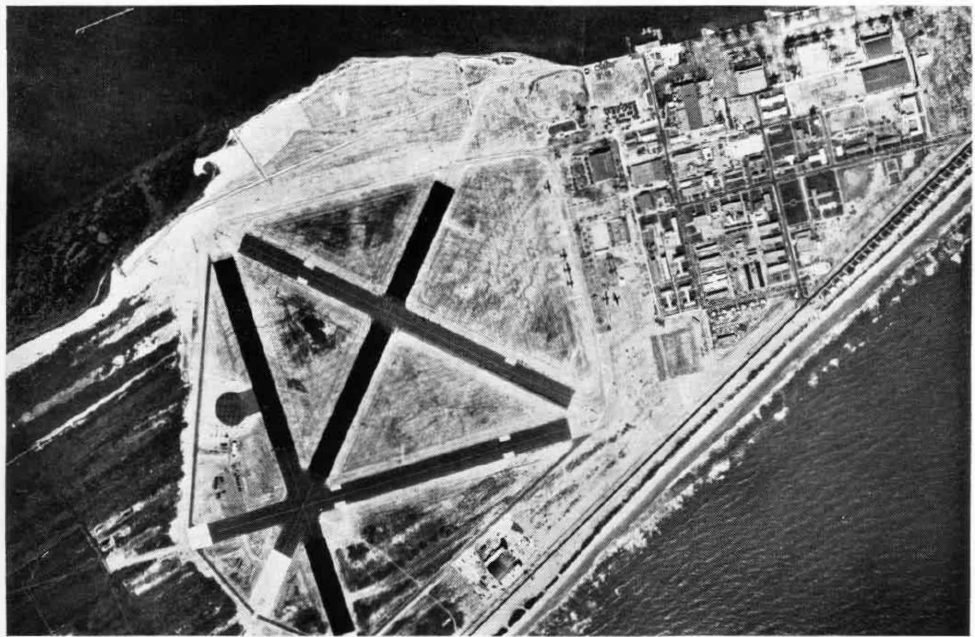
Patrick Space Force Base, on the Brevard barrier strip immediately south of Cocoa Beach, started life as Banana River Naval Air Station in 1940, was deactivated briefly after World War II, was reactivated by the U.S. Air Force in 1948, was renamed Patrick Air Force Base in 1950 after Major General Mason Patrick, and was redesignated Patrick Space Force Base in 2020 when the new Space Force absorbed it. Across 86 years and three service branches, the base has been the single most important institutional driver of Cocoa Beach’s growth: it brought the contractor jobs in the 1950s, it housed the launch infrastructure that fed Mercury and Apollo in the 1960s, and it remains, in 2026, the largest single employer in southern Brevard.
This is the documented history.
Banana River Naval Air Station, 1940 to 1947
The U.S. Navy opened Banana River Naval Air Station in October 1940 on the southern Cocoa Beach barrier strip, fourteen months before Pearl Harbor. The base was commissioned for patrol-aircraft operations, specifically anti-submarine warfare patrols over the Atlantic and Gulf of Mexico approaches to Florida. During World War II it operated PBY Catalina and PBM Mariner flying boats, hunting German U-boats that menaced Florida shipping.
The German U-boat threat to Florida shipping was real and substantial. Multiple Allied ships were sunk off the Florida east coast in 1942 and 1943; Banana River NAS’s patrol aircraft were part of the response. Postwar declassified records document the patrols, the few combat actions, and the base’s training role for naval aviators rotated through.
After Japan’s surrender in August 1945, the Navy reduced its training and patrol commitments. Banana River NAS was placed in caretaker status in 1947, with skeleton operations through the year.
The Air Force takeover, 1948 to 1950
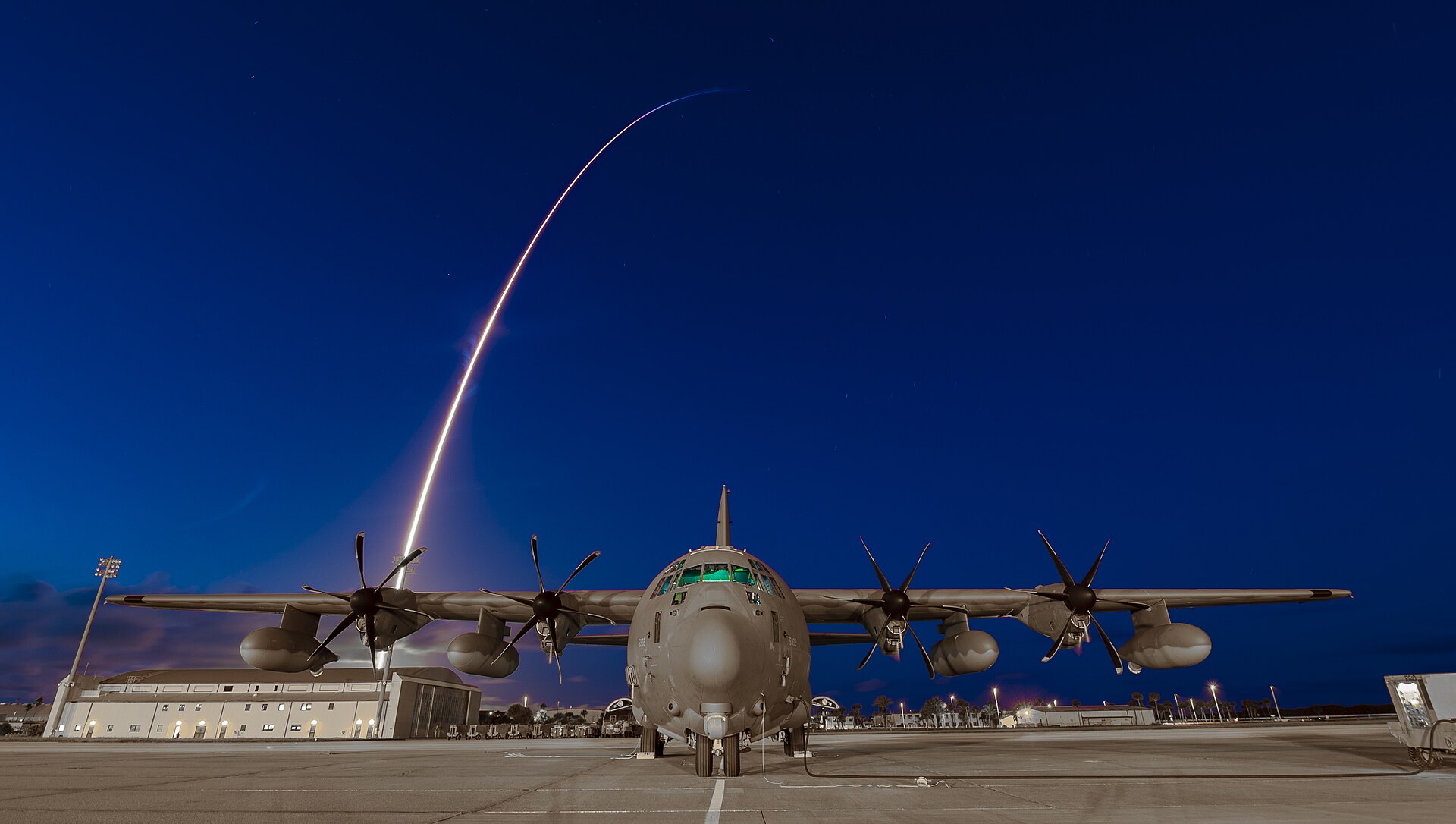
In 1948 the U.S. Air Force (newly established as a separate service in September 1947) acquired Banana River NAS from the Navy. The Air Force initially used the base for limited operations and was evaluating its role. The decisive change came in June 1949, when the Department of Defense established the Joint Long Range Proving Ground at nearby Cape Canaveral, designated to test long-range guided missiles being developed under the Cold War mobilization.
The proving ground needed a logistical and administrative base. Cape Canaveral itself was a launch facility; the supporting infrastructure (housing, mess facilities, maintenance, command staff) needed to be elsewhere. Banana River NAS, fifteen miles south of the Cape and already partially built out, was the obvious choice.
The base was renamed Patrick Air Force Base on August 1, 1950, after Major General Mason Mathews Patrick (1863–1942), who had commanded U.S. Army Air Service in World War I and led the Army Air Corps in the interwar years. Patrick is in the named-after-officer tradition of military base naming.
The missile era, 1950 to 1958
The first launch from the Cape Canaveral Long Range Proving Ground was Bumper-WAC #8 on July 24, 1950, a two-stage rocket combining a V-2 (yes, German-derived) first stage with a smaller WAC Corporal second stage. The launch was a Patrick AFB-supported operation; the base’s role was logistical and administrative.
Through the 1950s the base supported a series of missile programs:
- Bumper (1950): German-derived testing
- Lark, Matador, Snark (1950s): early cruise missiles
- Redstone (1953 onward): Wernher von Braun’s medium-range ballistic missile, which would later boost Alan Shepard
- Thor (1957 onward): intermediate-range ballistic missile
- Atlas (1957 onward): the program that would later boost John Glenn and Mercury-Atlas flights
- Titan (1959 onward): heavy-lift program that would support Gemini
By 1958, the base supported a permanent military and civilian workforce of several thousand personnel. The Air Force Missile Test Center, headquartered at Patrick, coordinated launch operations, range safety, and tracking.
NASA and the manned spaceflight era, 1958 to 1972
The National Aeronautics and Space Act of 1958 established NASA as a civilian agency. NASA’s Florida launch operations used Cape Canaveral facilities provided by the Air Force / Patrick AFB. The relationship was complex: NASA had the missions and the launch vehicles, the Air Force owned the land and operated the range, and Patrick AFB provided the supporting infrastructure.
During Mercury, Gemini, and Apollo:
- Mercury Redstone and Mercury Atlas launches (1961–1963): from Cape Canaveral pads, supported by Patrick
- Gemini Titan II launches (1965–1966): from Cape Canaveral pads, supported by Patrick
- Apollo Saturn IB and Saturn V launches (1966–1972): from the new Kennedy Space Center Launch Complex 39 (Saturn V) and from Cape Canaveral (Saturn IB), supported by Patrick
Patrick AFB housed the personnel, the families, the medical facilities, the BXs, the schools (DODEA Patrick Elementary School and others), and the recreational infrastructure (the famous Patrick AFB beach, with public-domain photos in our archive). The Cocoa Beach community immediately to the north absorbed the contractor overflow and the off-duty social activity (the bars, restaurants, motels covered in our Mercury 7 and Apollo 11 crowd pieces).
The Shuttle era, 1981 to 2011
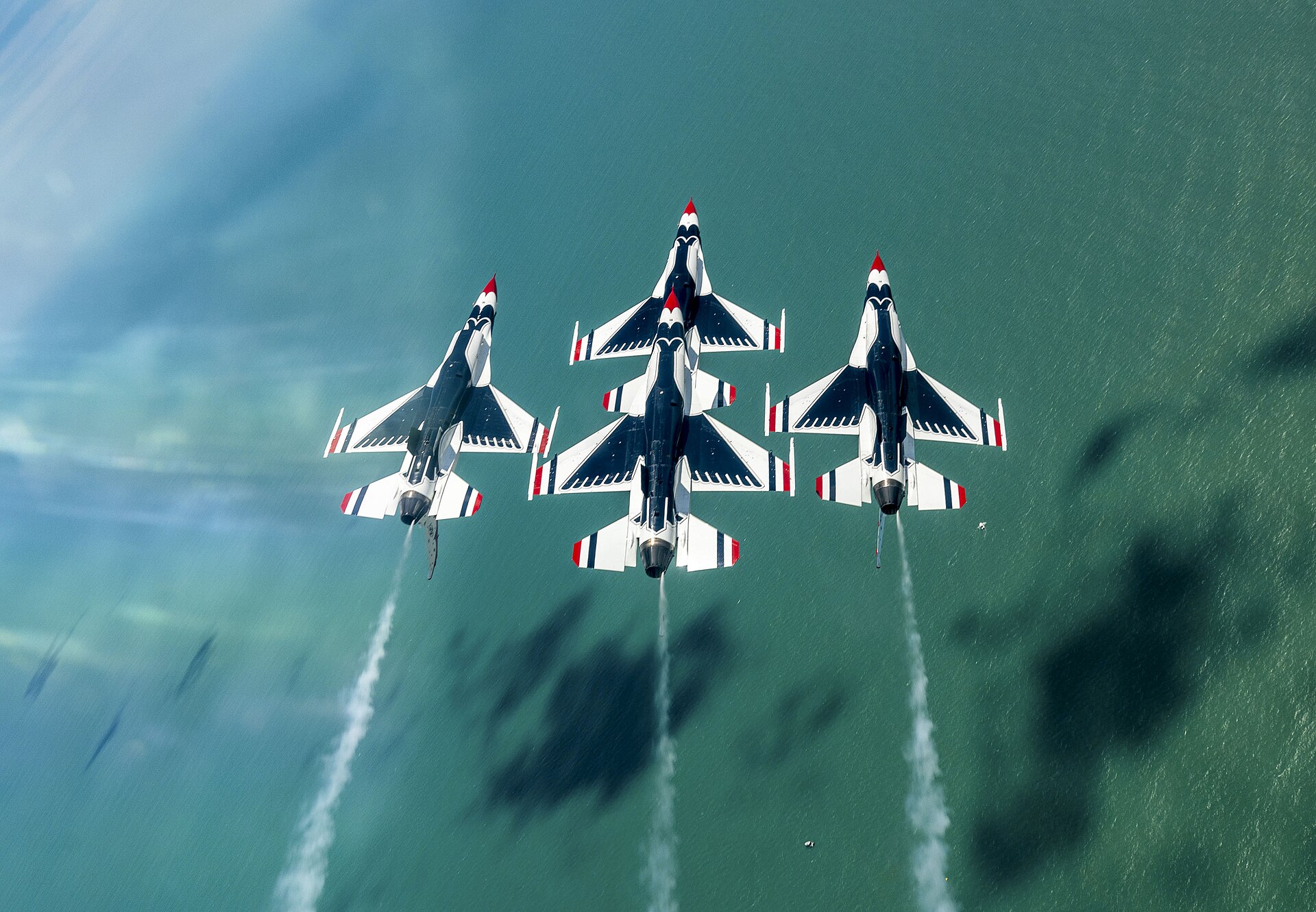
After Apollo wound down, the base continued to support Cape Canaveral and Kennedy Space Center operations through the Space Shuttle era. The Shuttle launched from KSC Launch Complex 39A and 39B between April 12, 1981 (STS-1) and July 21, 2011 (STS-135). Patrick AFB provided the same supporting infrastructure it had during Apollo, plus additional roles in the Cape Canaveral Air Force Station for unmanned-payload launches (commercial communications satellites, military payloads, planetary missions).
During the Shuttle era, the base’s workforce grew slowly. The Air Force Space Command (established 1982) reorganized Air Force space operations and reaffirmed Patrick’s role.
The Space Force era, 2020 onward
The United States Space Force was established as the sixth branch of the U.S. armed forces on December 20, 2019. In December 2020, Patrick Air Force Base was redesignated Patrick Space Force Base. Cape Canaveral Air Force Station was simultaneously redesignated Cape Canaveral Space Force Station. The mission essentially continued: launch range operations, satellite tracking, military space operations support.
Patrick Space Force Base in 2026 supports:
- Cape Canaveral Space Force Station launch operations (SpaceX, ULA, smaller providers)
- Space Force operational units (Space Delta 45 is the launch-range organization)
- Air Force Space Command legacy operations
- Joint personnel housing for active-duty Space Force, Air Force, and other service members
- Personnel medical, exchange, and family support facilities
The base is open to authorized military personnel and civilian contractors. The public is generally not admitted; the public-domain photos in our archive (chapel, theater, aerial views) were taken in approved-access conditions or for official military communications.
What Patrick has given Cocoa Beach
The base has been Cocoa Beach’s economic anchor for 86 years. The numbers are hard to specify precisely (base employment varies year-to-year and includes contractor staffing that isn’t all on base), but in 2026 the base’s direct and contractor workforce is roughly 7,000 to 9,000 people, of whom a substantial fraction live in Cocoa Beach or commute through it daily. The base’s payroll, contractor procurement, and family-related spending support hundreds of small businesses in Cocoa Beach and the surrounding Brevard barrier strip.
Beyond payroll, Patrick provides infrastructure-equivalents that the town benefits from indirectly: a substantial portion of the surrounding road network and utility infrastructure has been designed to support base traffic patterns and capacities. The runways at Patrick (now Patrick SFB) handle commercial cargo charter operations that would be more difficult through Melbourne International. The base’s emergency response capacity is, effectively, an insurance policy for the entire barrier strip.
What Patrick has cost Cocoa Beach is harder to measure: the noise of constant aircraft and launch-vehicle operations, the periodic on-base accidents that affect the wider community, and the political dynamics of a town whose economic existence depends on continued federal Department of Defense and NASA spending.
The town and the base have been intertwined since 1950. The 2020 redesignation to Space Force was largely symbolic for Cocoa Beach. The actual operational relationship, base over there, town up here, contractor families in between, remains.
Further Reading
- Cape Canaveral by Ray Osborne
- Live from Cape Canaveral: Covering the Space Race by Jay Barbree
- The Right Stuff by Tom Wolfe
Sources
- Patrick Space Force Base official history, patrick.spaceforce.mil/About-Us/History
- U.S. Air Force Historical Research Agency, afhra.af.mil
- NASA History Office, Cape Canaveral and Kennedy Space Center, nasa.gov/history
- Department of Defense base-naming records, Mason M. Patrick biographical files
- Florida Today archives, base coverage 1950 to 2022
As an Amazon Associate we earn from qualifying purchases.