Ron Jon Surf Shop: founded 1959 in NJ, opened Cocoa Beach 1963
How a New Jersey surfer named Ron DiMenna opened the first East Coast surf shop chain, expanded into Cocoa Beach in 1963, and built the 52,000-square-foot 24-hour flagship that locals still call 'the castle.'
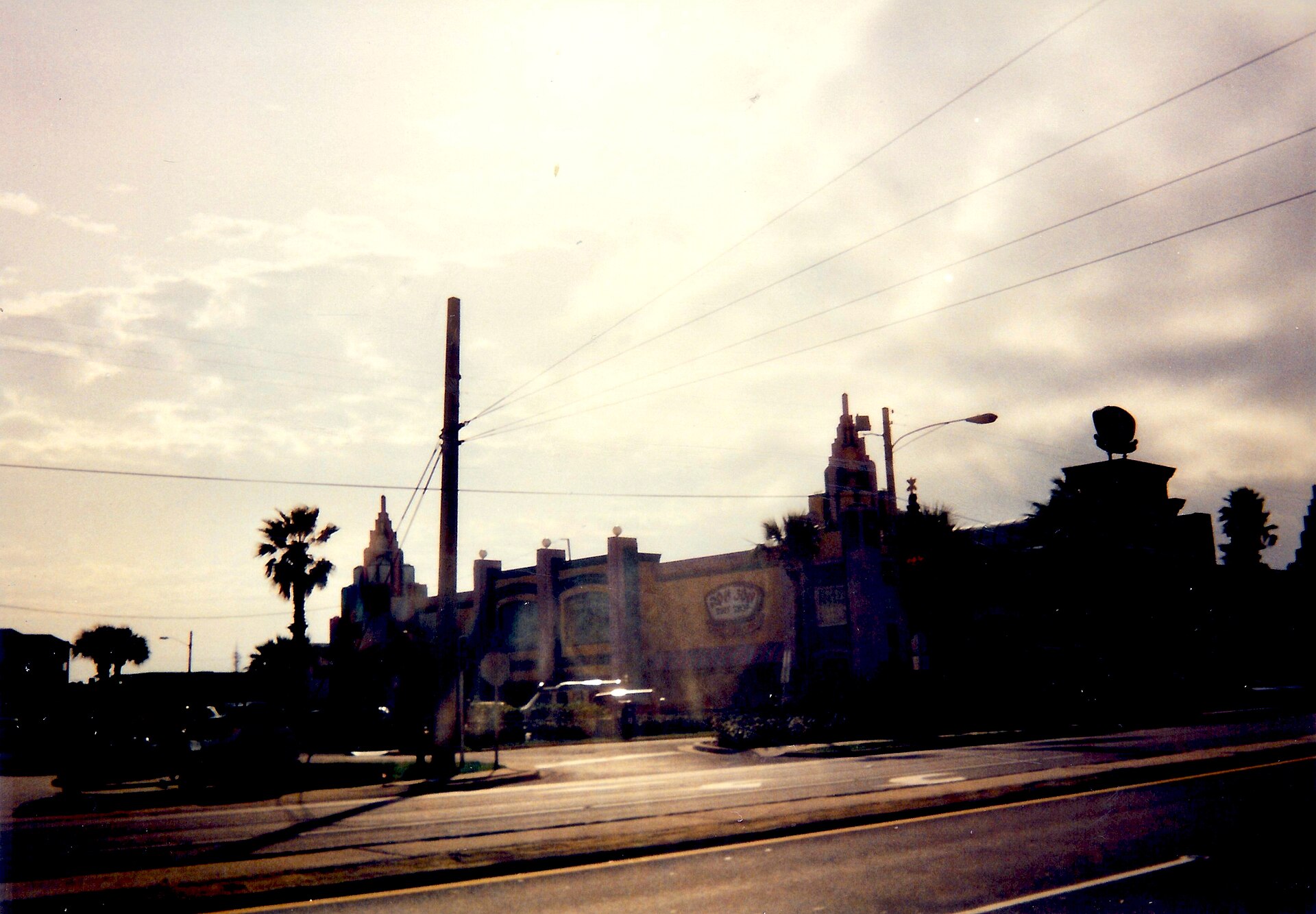
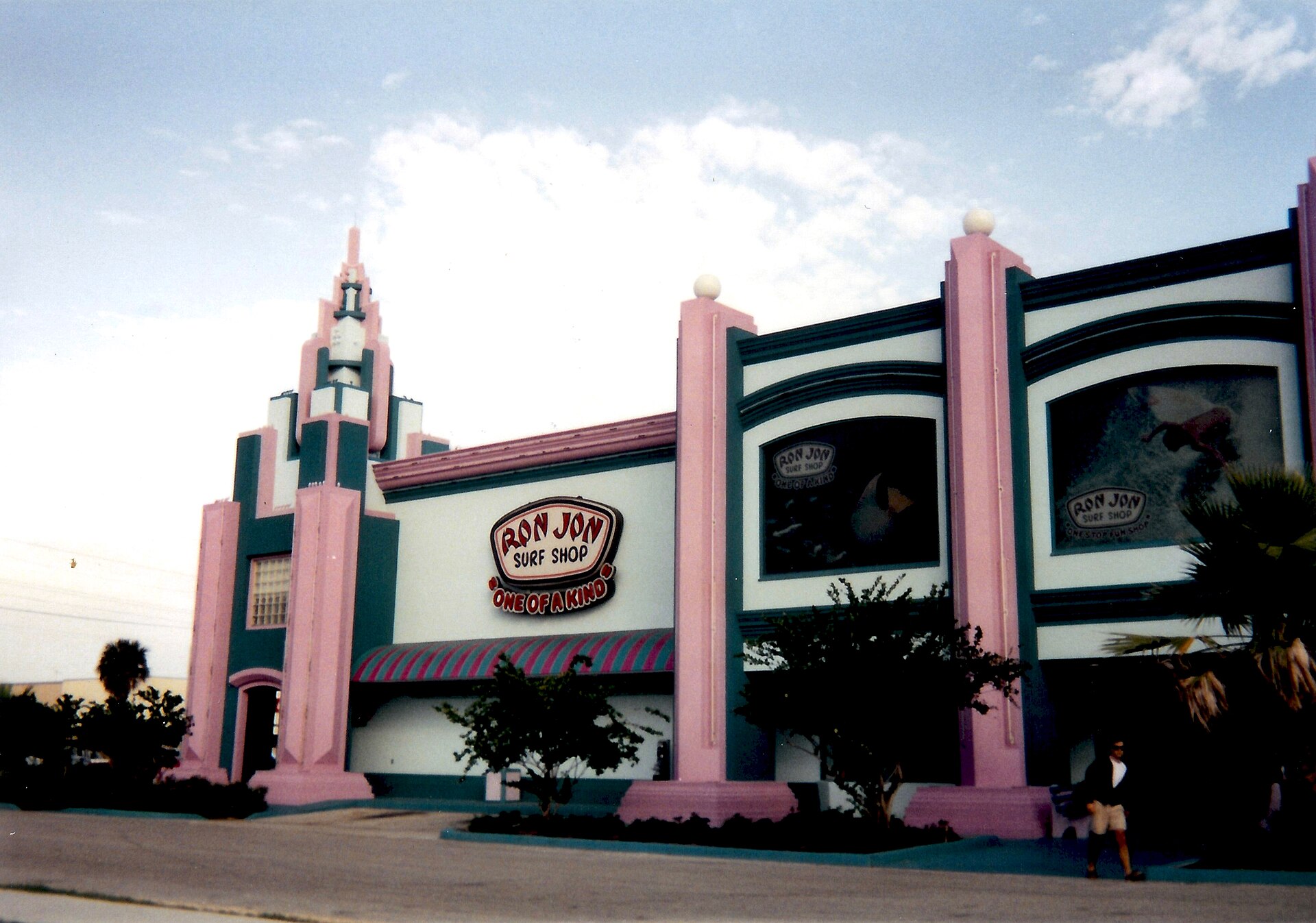
Ron Jon Surf Shop, the 52,000-square-foot 24-hour-operating flagship on State Road A1A in Cocoa Beach, sits on Florida’s most-billboard-advertised real estate. The chain claims status as the largest surf shop in the world by floor area, an unverifiable but generally undisputed claim. None of that existed in 1959. In 1959 Ron Jon was a single hand-built surfboard sold by a sixteen-year-old New Jersey kid named Ron DiMenna out of the back of his father’s car.
The Cocoa Beach store opened in 1963, four years after the New Jersey original and the same year the East Coast surfing scene was finding its feet on the Florida barrier islands. It’s been there ever since. The current building is the result of multiple expansions over six decades, the most ambitious in the 1980s, and it does roughly $50 million a year in revenue from a single retail location, by trade-press estimates.
This is the documented history of how a New Jersey surf operation came to Cocoa Beach, why it stayed, and what the store actually is.
The New Jersey origin, 1959
DiMenna grew up in Ship Bottom, New Jersey, on Long Beach Island. As a teenager he ordered surfboards from California by mail-order, which was, in 1958, almost the only way to get a serious board on the East Coast. He decided he could do better selling them locally and convinced his father to front him $1,500 to start a small business. The legal entity was incorporated in 1961; the first Ron Jon shop opened on Long Beach Island in 1959 (some sources give 1961 as the formal founding date, reflecting the corporate incorporation).
The “Ron Jon” name came from DiMenna and a partner (Ron + Jon). The partner later dropped out; the name stuck. The New Jersey store served the small but growing East Coast surf scene through the early 1960s, primarily by importing California shapers’ work and selling it at a markup, then progressively manufacturing and shaping in-house.
Why Cocoa Beach
By 1963, Cocoa Beach had the things New Jersey didn’t: year-round surfable swell, year-round customers, a growing tourist economy, and increasing visibility as an East Coast surfing center. The Eastern Surfing Association would form in 1967, headquartered in Brevard County. The Florida Surfing Association was already active. Local surfers like Dick Catri (who would later promote and run multiple Cocoa Beach surfing operations) were establishing the area as the regional center.
DiMenna opened the Cocoa Beach store in 1963 as a Florida outpost of the New Jersey operation. The original location was a small storefront on A1A, much smaller than the eventual flagship. Inventory was boards, wax, leashes (those came later, in the 1970s), wetsuits, and apparel. Customers were locals, growing weekly numbers of visiting surfers from Georgia and the Carolinas, and the tourists who walked in for souvenirs.
The store grew through the 1960s. By 1970 it was a known quantity in East Coast surfing. By 1980 it had moved to the current A1A location and begun the expansion sequence that turned it into the destination it is now.
The expansion sequence
The current Ron Jon flagship at 4151 N. Atlantic Avenue (State Road A1A), Cocoa Beach, is the result of a multi-phase expansion that ran through the 1980s and 1990s. The footprint grew from a few thousand square feet to its present 52,000 square feet across two floors. The building’s architecture, the white tower, the wave-graphic facade, the night-illuminated frontage visible from miles up and down A1A, was designed for tourist visibility, not local surfer functionality, and the store has been engineered around that visibility ever since.
The 24-hour operating schedule started in the 1990s. Cocoa Beach already had a tourist trade with overnight visitors arriving at all hours; the store decided to staff overnight rather than turn customers away. By the late 1990s it was one of the few 24-hour retail operations in Brevard County and a documented destination on tourism marketing maps.
The billboard campaign is its own story. Ron Jon Cocoa Beach has, since the 1980s, run one of the most extensive billboard programs on the U.S. Interstate system. Mile-counted Ron Jon billboards appear on I-95 from Maine to Florida, on I-75 across the Southeast, and on Florida’s Turnpike, counting down miles to the Cocoa Beach store. The campaign is documented in trade publications and in the experience of anyone who’s ever driven the I-95 corridor: hundreds of billboards over thousands of miles, all pointing to one A1A address.
What’s actually in the store
The 2026 inventory mix at Ron Jon Cocoa Beach is heavier on apparel and souvenirs than on serious surf equipment. Boards are still there, in a dedicated upstairs section, and the staff can advise on shapes, but the dollar volume is dominated by t-shirts, sunglasses, beach towels, sandals, swimwear, beach toys, and Cocoa Beach-branded merchandise. This shift reflects the customer base, which is heavily tourist (cruise ship traffic from Port Canaveral, drive-in visitors from elsewhere in Florida, vacation renters at Cocoa Beach properties) and lightly local-surfer.
Local surfers in 2026 are more likely to buy serious equipment from smaller shops in Brevard County, Spectrum Surf Shop in Indialantic, the various smaller operations along the coast, that focus exclusively on board sales and shaping. Ron Jon’s value to the serious local market is mostly in wax, leashes, fins, and incidentals, not in board shaping.
That’s not a criticism. It’s a business model. Ron Jon discovered, before most surf retailers did, that the tourist apparel and souvenir market is much larger than the actual surfer market, and built the operation around that insight. The result is a 52,000-square-foot store doing $50 million a year on a Cocoa Beach lot. No other surf shop in the world has matched that scale.
The cultural footprint
Ron Jon’s Cocoa Beach store appears in a hundred pop-culture moments, country music videos, I Dream of Jeannie references (the show was set in Cocoa Beach, though shot in Los Angeles), travel TV segments, surfing documentaries, and the steady drip of celebrity drop-ins documented by the store’s social media. The “I shopped at Ron Jon” decal is, by Florida tourism analysis, one of the most-stuck bumper stickers in American highway history.
For Cocoa Beach itself, the store is both a tourism asset and a symbol. The asset side is the foot traffic, Ron Jon Cocoa Beach pulls roughly two million visitors a year by company estimates, of whom most spend money downtown. The symbol side is harder to quantify but real: Ron Jon is the visual brand of Cocoa Beach to anyone who’s only ever driven through, and the chain’s identity is intertwined with the town’s in a way that’s now permanent.
DiMenna himself remains involved with the company (he’s in his eighties as of 2026, but the operation remains family-related). The chain has expanded to additional locations, Orlando, Key West, Bahamas, but the Cocoa Beach flagship is the only one that operates 24 hours, the only one at the 52,000-square-foot scale, and the one everyone means when they say “Ron Jon.”
Further Reading
Sources
- Ron Jon Surf Shop, official company history, ronjonsurfshop.com/about
- Florida Memory Project, Phillip Pessar 1991 photographic series of Cocoa Beach businesses
- Surfing Heritage and Culture Center, oral histories, surfingheritage.org
- Surfer Magazine archives, East Coast retail features (1960s–1990s)
- Florida Department of Revenue, corporate registry for Ron Jon Surf Shop, Inc.
As an Amazon Associate we earn from qualifying purchases.