Why Cocoa Beach worked, the editorial premise
What made Cocoa Beach into what it became, when most barrier-island Florida towns of the same vintage faded or never grew at all. A 1,200-word editorial argument about geography, timing, and one Department of Defense decision.
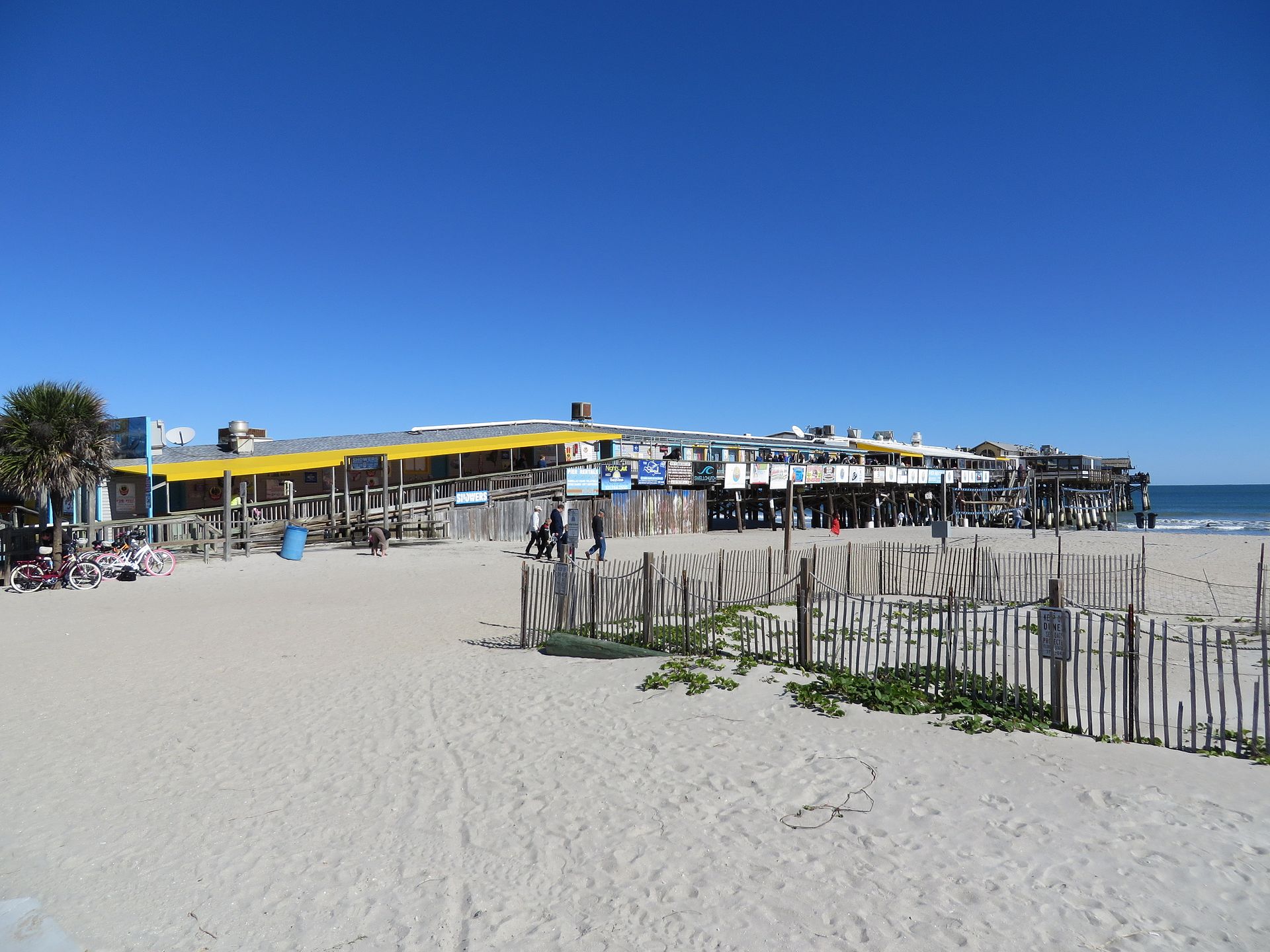
Cocoa Beach is not, on its merits, an obvious place. A one-mile-wide sand barrier between a brackish lagoon and an open ocean, prone to hurricanes, with no fresh-water aquifer, no deep-water port, no natural harbor, no mineral resource, no agricultural land worth tilling. By 1900 it had a few dozen residents and no clear future. By 1925 it had a town charter and 27 residents. By 1970 it had ten thousand residents and was nationally famous.
What happened in between is not a story of inherent advantage. It’s a story of three specific decisions, one developer, one defense department, one cultural moment, that converged on a barrier island that wouldn’t otherwise have mattered.
That’s the editorial argument of this site, and this piece states it directly.
The developer decision: Gus Edwards, 1923
Without Gus C. Edwards, the Cocoa Beach barrier strip would have remained a fishing-camp scatter through the Great Depression and into World War II. Edwards’s 1923 tax-sale acquisition (covered in our piece on it) was the act that platted a town where there was no town, sold lots when nobody was buying, and pushed the 1925 incorporation through Florida’s municipal-charter process.
Most Florida-boom developers of the 1920s went broke after the 1926 Miami hurricane and the 1929 stock-market crash. Their unincorporated subdivisions reverted to county-administered land, often returning to scrub palmetto within a decade. Cocoa Beach didn’t, because the incorporation had created a legal entity that persisted regardless of population. The town was on the books. The charter didn’t lapse. When the next wave of growth arrived 25 years later, the legal framework was ready.
This is the underappreciated piece. The 1925 charter looks like a footnote at population 27. By 1955 it was the difference between a town that could issue bonds, assess taxes, build roads, and zone land, and a stretch of unincorporated county that could do none of those things. The military-industrial complex that arrived after 1950 wanted to work with a town. Cocoa Beach was a town, on paper, when Brevard’s other barrier-island stretches weren’t. The work happened here.
The defense department decision: the Long Range Proving Ground, 1949 to 1950
Without the June 1949 establishment of the Joint Long Range Proving Ground at Cape Canaveral, Cocoa Beach would have remained a sleepy Brevard barrier town through the Cold War, like the Florida east coast’s many other barrier strips. Patrick Air Force Base would have remained a small Navy patrol base or been deactivated entirely. The contractor wave wouldn’t have come. The astronauts wouldn’t have lived nearby. None of it.
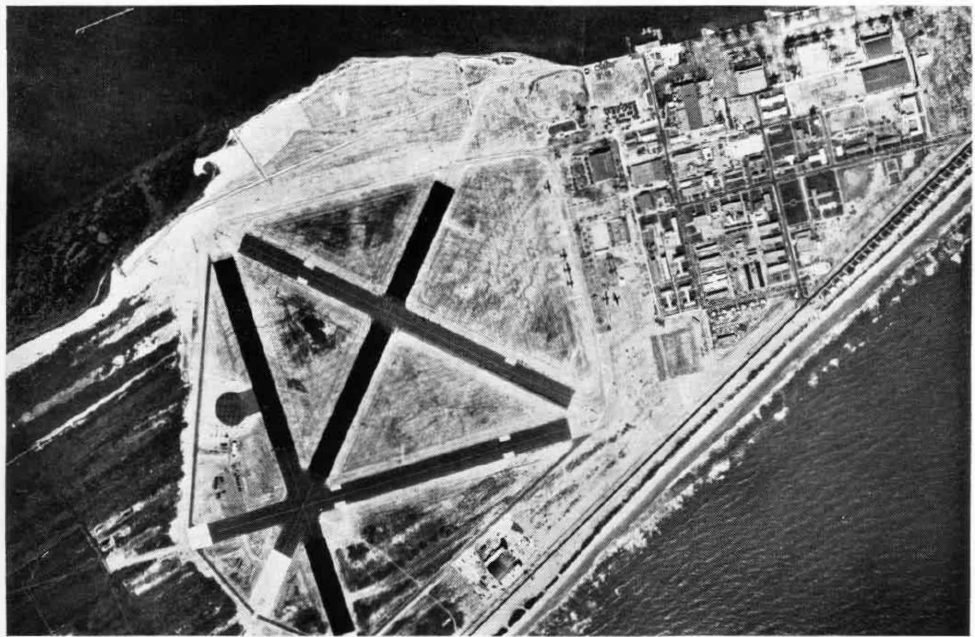
The 1949 to 1950 sequence, the proving ground established, Patrick AFB renamed and rerolled, the first missile launches in 1950, was a Department of Defense decision about where to test guided missiles. The decision factors were technical: Florida’s east-coast geography put the Atlantic Ocean’s broad missile-impact areas immediately offshore (no risk to populated areas if a missile went off course), the launch latitude favored eastward orbital and sub-orbital trajectories, and the existing Navy infrastructure at Banana River NAS could be repurposed cheaply.
Cocoa Beach got chosen for the contractor housing not because it was the best Florida town for the role but because it was the closest town to the launch pads with any existing infrastructure. The 1925 charter mattered. The 1923 plat mattered. The fact that lots were available, partially graded, with electricity and rough roads, mattered.
If the proving ground had gone to a different latitude, Texas, California, the Carolinas, Cocoa Beach in 2026 would look very different. Maybe a sport-fishing destination with 2,000 residents. Maybe nothing. The DoD decision is, by far, the single most important external event in the town’s history.
The cultural moment: the Space Race, 1957 to 1972
The third decision wasn’t local. It was the Kennedy administration’s 1961 commitment to the manned lunar program, and the broader Space Race cultural commitment that ran from Sputnik in 1957 through Apollo 17 in December 1972. That fifteen-year cultural moment turned Cocoa Beach from a Cold War contractor town into a nationally recognized symbol of American space achievement.
The Beach Boys never wrote a Cocoa Beach song, but I Dream of Jeannie ran for five seasons set in Cocoa Beach, and Life magazine ran spreads. Apollo 11 in July 1969 drew a million people to the Brevard coast. The astronauts’ faces, drinking coffee at Bernard’s Surf and the Holiday Inn bar, became visual elements of the broader American cultural moment.
Without the space-race cultural elevation, Cocoa Beach would have been a contractor town like Huntsville, Alabama (Marshall Space Flight Center) or Houston (Manned Spacecraft Center / Johnson Space Center). Those towns are large and economically successful, but they aren’t nationally iconic the way Cocoa Beach became. The barrier-island visual, the beach, the pier, the surfers, gave Cocoa Beach a visual signature the other space centers couldn’t match. The town became a synecdoche for the space program in a way that the actual launch sites and engineering centers didn’t.
What didn’t work
The counter-history is interesting. Cape Canaveral (the town, not the launch site) is immediately north of Cocoa Beach on the same barrier strip. It incorporated later (1962), grew less, and has a smaller population than Cocoa Beach today. Indian Harbour Beach, Indialantic, Melbourne Beach, barrier-island towns south of Cocoa Beach, all grew during the Apollo era but never reached the cultural prominence. The difference is partly historical accident (Cocoa Beach had the Holiday Inn that the astronauts used, the restaurants that they liked, the surf shop that Ron Jon opened in 1963), but it’s not coincidence. Cocoa Beach was the first-mover in the contractor-housing market, the first-mover in the surf-retail market, and the first-mover in the Apollo-tourist market.
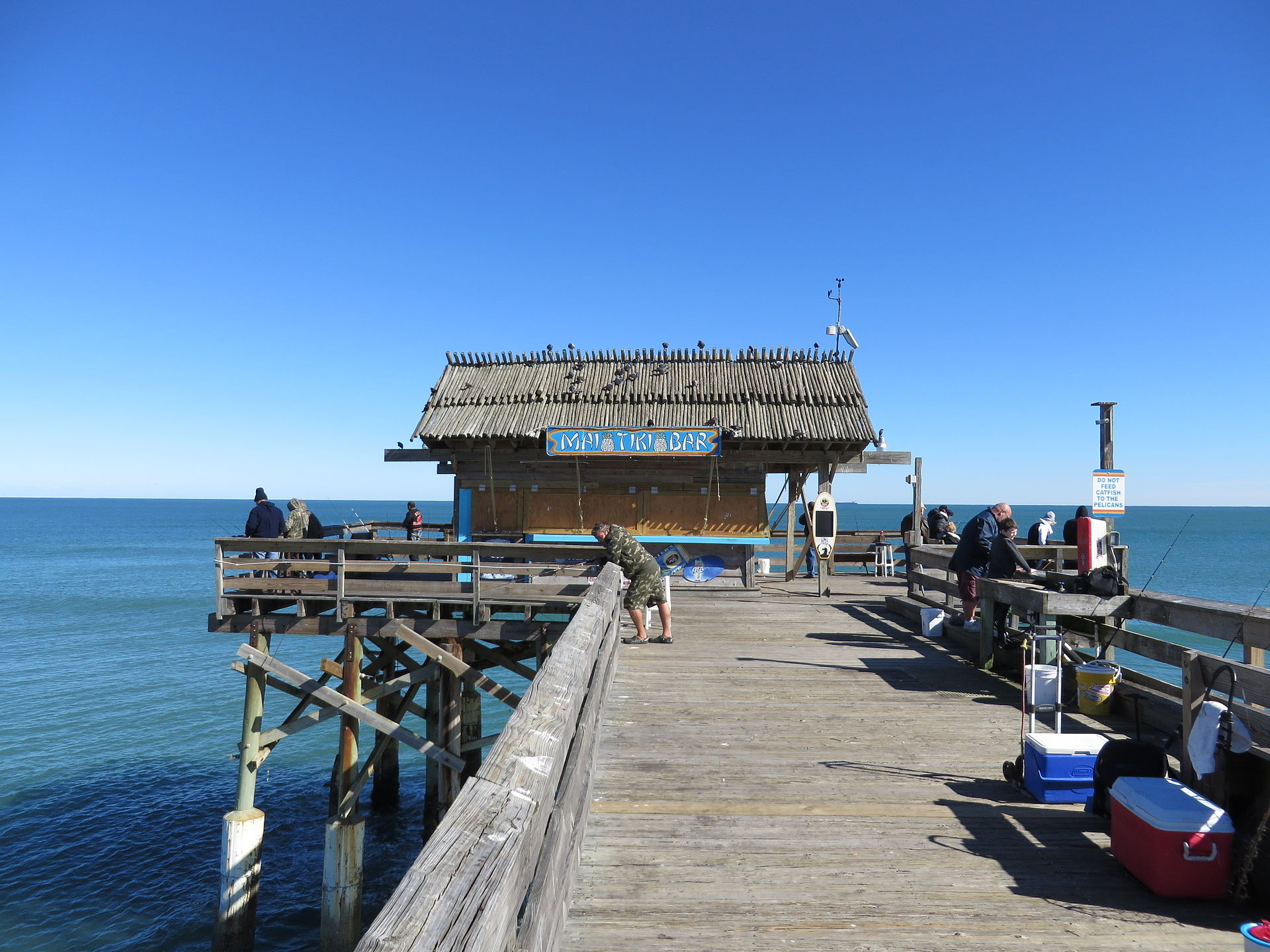
First-mover advantages compound. Bernard’s Surf was the astronaut bar because it opened in 1948 and was already there when the astronauts arrived in 1959. Ron Jon expanded to its eventual scale because the 1963 Cocoa Beach store had been there, growing, before the rest of the surf-retail world caught up. The Cocoa Beach Pier opened in 1962 because the local development capital was there to fund it; the comparable barrier strips didn’t have the same accumulation of decision-ready capital.
What it means for now
The decisions that built Cocoa Beach were made between 1923 and 1969. The town has spent the subsequent 55-plus years living off the infrastructure, identity, and cultural momentum those decisions created. SpaceX launches in the 2020s have given the town a partial revival of the original Space Race energy, but the foundational growth is over. The barrier strip in 2026 is roughly fully developed; population growth from here is incremental, not transformational.
What Cocoa Beach has, going forward, is its history. The astronauts. Kelly Slater. Bernard’s Surf. The pier. Ron Jon. The 1925 charter, the 1950 base, the 1969 launch. These are the assets a barrier-island town has at the end of the boom, not the beach itself, which can be matched by hundreds of other Florida towns, but the specific things that happened on this beach and not on others.
A barrier island that became internationally famous on the strength of one missile-testing decision and three decades of cultural amplification is not common. Cocoa Beach is the result. The actual sand is unchanged. Everything on top of it is consequence.
That’s what worked. That’s why this site exists. The history is worth recording because the convergence that produced it isn’t going to repeat anywhere else.
Further Reading
- Florida: A Short History by Michael Gannon
- Live from Cape Canaveral: Covering the Space Race by Jay Barbree
- The Right Stuff by Tom Wolfe
Sources
- All preceding articles on this site, individually sourced
- U.S. Census Bureau, decennial population data 1925 to 2020
- NASA, USAF, Patrick AFB, U.S. Space Force historical records
- City of Cocoa Beach, official history and charter documents
- Florida Memory Project, Brevard County collections
As an Amazon Associate we earn from qualifying purchases.